
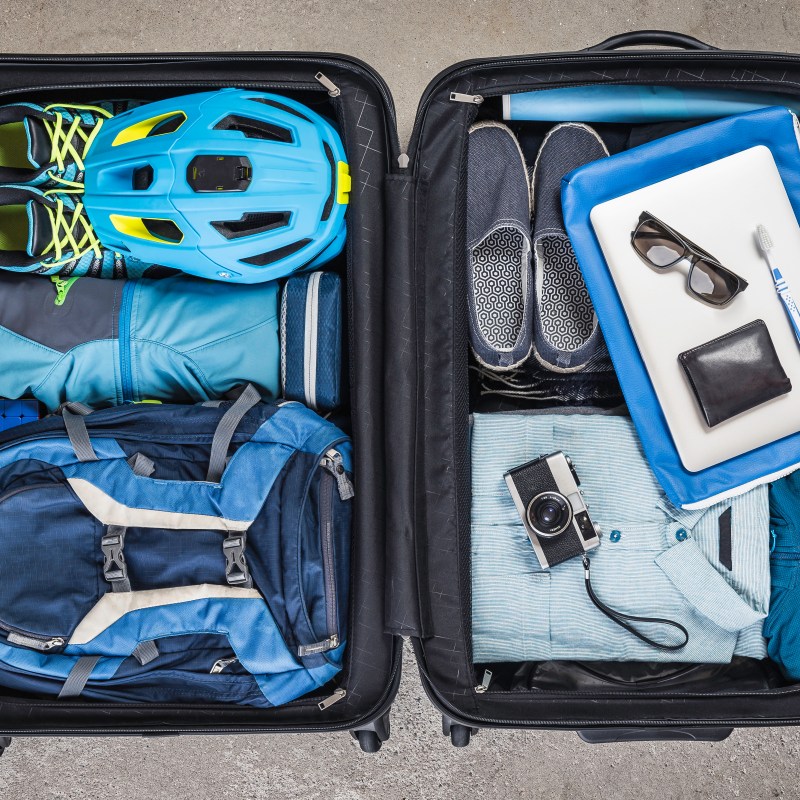
There’s no shortage of packing advice out there.
Videos by TravelAwaits
Personally, I prefer to stick to a carry-on anytime possible, pack strictly for the forecast, and rely on weirder packing hacks, like latex balloons and mini-carabiners.
Almost universally, I recommend that travelers pack in a modular, lightweight fashion—and that they leave that bulky pair of shoes and other space-wasters behind.
That being said, this is just my take on travel. Like I mentioned, there’s an abundance of packing advice out there. Even if you don’t follow it to the T, you can learn a few tricks and insights along the way.
Enter one of the latest packing methodologies I’ve seen take off. It’s called the 1 2 3 4 5 6 packing method, thanks to its simple and straightforward list of items to pack.
Ready to learn about packing from a pure numbers perspective? Here’s a closer look at two similar packing methods, which some frequent travelers (including business travelers) swear by.
The 1 2 3 4 5 6 packing method: pack light every time
The main goal of the 1 2 3 4 5 6 packing method is to ensure you fill your suitcase with all the necessary items without overpacking. I usually see the 1 2 3 4 5 6 packing method recommended for backpackers and anyone traveling with a small carry-on, but I think it’s also a great way to think about (or reconsider) your approach to packing.
The numbers stand for the number of clothing items you should back from each category. Here they are:
- 1 hat
- 2 pairs of shoes
- 3 bottoms
- 4 tops
- 5 pairs of socks
- 6 pairs of underwear (plus one bra, if you need it)
This setup should hold you over for one week of travel. In backpacker circles, you only need one week’s worth of clean clothes, as laundry days are built into these types of travel schedules.
I think packing one week’s worth of clothes is a great tip for any traveler—even if you have a checked bag with you.
Rugged-ready brands like REI like to recommend the 1 2 3 4 5 6 packing method—but I’ve also seen it recommended by frequent flyers, business travelers, and last-minute jet-setters. Aside from giving you a solid framework to start building out your own packing routine, this method is also great for last-minute trips, especially if you’re using a weekender bag.
Just remember: activewear and sleepwear should be counted as part of those clothing counts. As in, if you sleep in an oversized tee, it counts as one of your tops. However, that’s not the case with swimwear. Pack swimwear separately—it shouldn’t get in the way.
