
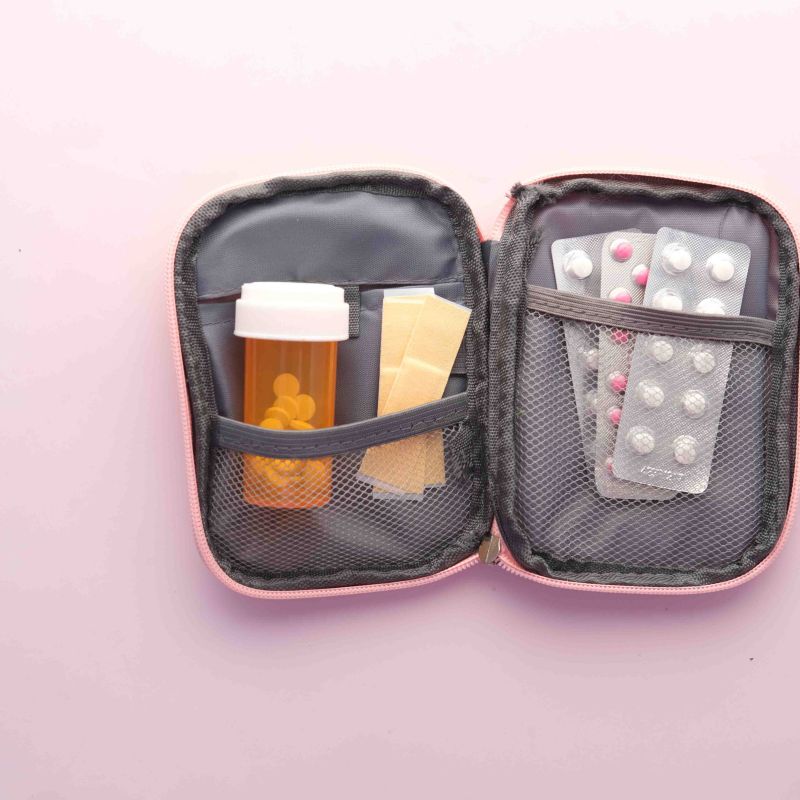
Medicine and travel are an intriguing topic.
Videos by TravelAwaits
On one hand, it’s tricky to know whether you’re (unwittingly) bringing an illegal medication into a country when it’s legal back at home. The reverse is also true—what if you buy medication at a legitimate pharmacy abroad and pack it in your bag without realizing it contains an ingredient that’s illegal in the United States?
For the vast majority of travelers, bringing a personal supply of Sudafed or birth control won’t cause any problems at the border. However, there are cases in which you could actually be fined or charged with carrying a controlled substance. For example, Adderall is prohibited in Japan and South Korea despite being legal with a prescription in the United States.
The best way to stay safe when traveling with medications (prescription or over-the-counter) is to speak with your doctor. They can flag ingredients that are controlled substances in other countries, along with providing more information about psychotropic and narcotic medications.
The CDC has a good overview if you want to dive into the details of traveling internationally with medication. They recommend speaking directly with your doctor to learn about your medication’s ingredients and other travel suggestions, like bringing your prescriptions with you or looking for an alternative medication for your trip.
US medicine that could get you in trouble abroad
If you regularly use these medications in the United States, make sure to look into their legal status at your destination.
- Opioid painkillers like oxycodone and codeine
- Sedatives like diazepam
- ADHD medications like Ritalin and Adderall
- OTC medicines like Sudafed and Benadryl
- Cannabis-derived medications and products
Insights: buying medicine that’s legal abroad but could be illegal without an FDA-approved prescription
Let’s say you get sick abroad and go to the pharmacy where the doctor recommends a few basic OTC medications. You should be able to bring these back into the United States with you, right?
The fine print is a little murky. Bringing in medication brands that imitate US OTC medications or prescriptions is not permitted because they haven’t been approved by the FDA for safety and efficacy. In other words, if you visit Mexico to pick up a Lipitor equivalent, Atorvastatin, you could be stopped at the border.
However, the FDA allows you to bring in a personal supply for up to 90 days of basic OTC medications. You must have a valid prescription for any RX medicines that you purchased abroad. The FDA writes, “However, FDA recognizes that some individuals may seek treatment with an unapproved new drug in a foreign country and may need to continue such treatment upon their return to the U.S.”
Keep in mind that all OTC medications must come in their original packaging, have clear information about the manufacturer, and have English-language packaging.
These are a few OTC items that you can buy abroad but aren’t permitted in the United States:
- Cough/cold medicines that contain pseudoephedrine or dextromethorphan
- Antihistamine medications that are combined with certain cough/cold medicines
- Imitation medications that have not been approved or evaluated by the FDA