
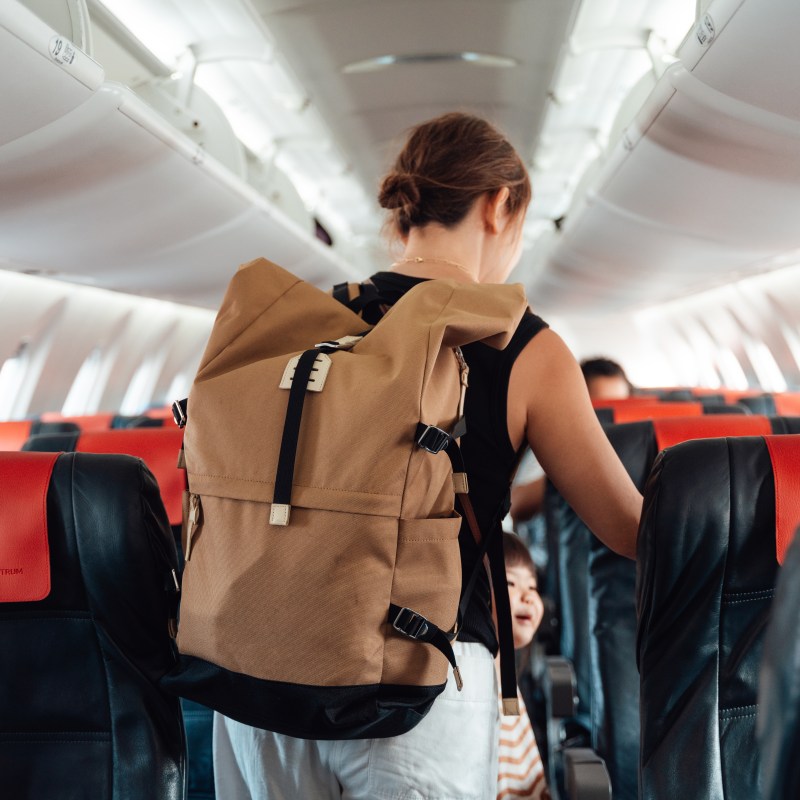
Have you recently swapped your rolling suitcase for a backpack carry-on?
Videos by TravelAwaits
It’s not a bad idea. Backpacks give you added flexibility when it comes to squeezing into places (like the last bus seat) or moving quickly through a crowd. They’re also much easier to cram into an airline’s bag limit container, in case a gate agent thinks it’s too large—which you can’t get away with if you’re using a hardshell suitcase.
In short, backpacks aren’t just for backpackers anymore. If you want, you can even have the best of both worlds with a rolling backpack.
But there is a catch.
There are two tricky elements of nailing a backpack carry-on. The first is managing weight. You can’t overpack a backpack, or your body will pay the price. The second is figuring out how to pack one. You can’t sit on top of your backpack to force the zipper to close—and you also don’t want a shoe poking you in the spine as you head across town.
Here’s the low-down on how to pack a backpack carry-on like a pro, even if it’s your first time. Warning: There’s one tip that’s so important that I’m going to use all caps to (lovingly) hammer home my point.
How to pack a backpack carry-on: 7 pieces of advice
Tip #1: Focus on weight distribution & must-have items first
Let’s take a quick lesson from pro hikers who keep their full camping gear in backpacks while they scale mountains. Adventure travelers who use backpacks while out in nature focus on packing in three zones: the bottom of your bag, the middle, and the top.
- Top: Pack your lightest gear up top to prevent your back from getting top-heavy and swaying.
- Middle: Pack your heaviest gear in the middle, including electronics and books. Keep the heaviest items close to your back. If you have any more space, pack lighter items toward the middle-outer shell of your backpack.
- Bottom: Keep your medium-weight gear at the bottom of your pack. This is usually the best spot for shoes and bulkier clothing, or even toiletries.
Your pockets should be used for any necessities that you want to keep in reach—although I recommend zipping up your backpack for good when you head out. (More on this below.) Just know that whatever you want to keep on hand should fit in your backpack’s outer pockets, or it should go in the very top compartment of the bag.
Tip #2: Use a crossbody to keep your essentials in reach
The best way to travel with a backpack is not to have to worry about digging around to find something. If your backpack has handy, easy-to-reach pockets, that’s a great place to store the essentials that you’ll need on the bus or your flight.
However, I highly recommend having a separate cross-body bag that you can use to store your must-haves, like a phone and passport. That way, you don’t need to unload and reload your backpack or set it down and then pick it back up.
Tip #3: Lay out all your gear before packing it, then trim the fat
If you’re going to learn how to pack a backpack like a pro, you’re going to need to learn about minimalism. If you want to dive in, I recommend Reddit’s r/onebag page. It covers travelers who break down their bare-bones packing lists and the tiny backpacks they use on their trips. It’s great food for thought for any travelers who are sick of overpacking.
If you’re new to packing backpacks, I recommend laying out your backpack, then setting all your gear next to it. Getting a bird’s-eye view should help you cut down on any unnecessary items.
Here’s what I nix first:
- Bulky clothes, including my ultra-fuzzy oversized sweaters
- A second or third pair of shoes
- My precious books (print books, not digital copies)
- Toiletries that I like but don’t need
Tip #4: Your sealing game should be literally airtight
If your shampoo bottle breaks open during a flight, it will leak into every corner of your backpack. It might even spill out of your backpack, depending on what fabric it’s made from. In a true case of bad karma coming back to haunt you, the liquid in question could even stain or compromise your backpack’s outer shell. (I’m thinking about oils.)
There are a few ways to get around spills when you pack your backpack:
- Bring the bare minimum when it comes to liquids—you can bring bar soap and shampoo, if necessary
- Aside from plastic or silicon bags, you can also use items like latex balloons to help seal caps—or even a doggy bag, if you’re okay with the optics
- If you’re bringing bottles, make sure they’re around 25-30% empty—it’ll help manage any spills caused by pressure changes
Tip #5: Keep your lithium-ion batteries in reach
This is a reminder to keep any lithium-ion battery packs or electronics in reach in your backpack carry-on. Lithium-ion batteries are prone to overheating, which can cause smoke and even fires. While airline crews are trained to handle these incidents while in the air, you might want to keep your battery packs and electronics within reach, just in case.
Tip #6: Don’t forget that you’ll need more bag inside your bag
Here’s another reminder: I always pack a small, foldable bag with me when I travel. If you’re traveling with a backpack as a carry-on and you have a small crossover bag to keep your essentials in reach, then bringing along a small and compact tote can help you day-to-day at your destination.
I usually use my barely-there tote for shopping, groceries, beach days, and even day trips. I have a Baggu, but I also highly recommend Bagsmart.
Tip #7: Your bag should be partly empty
I’ve saved my most important tip on how to pack a backpack as a carry-on—and I’m delivering it in caps. YOUR BACKPACK SHOULD NOT BE FULL when you’ve finished packing. This is a lesson I’ve learned time and again when using a single backpack: if it’s full when you leave, it’s going to be overflowing when you head back home.
Even if you don’t plan on shopping on vacation, I doubt your clothes will magically roll into compact shapes like they did the first time around—especially if you haven’t been able to do the laundry during your trip. In short, your gear will magically bloat during your vacation.
When you leave space in your backpack (I recommend not packing between 20-30%), you leave room for those last-minute purchases.