
When someone brings up Georgia, the American mind usually goes to the country’s historical Southeastern state.
Videos by TravelAwaits
From the sleepy coast near Savannah to the bustling metro of Atlanta, it’s a dynamic place to explore. But Georgia is also a country, one that’s separated from the US state by over 6,000 miles.
It’s a small thimble nestled in the Caucasus mountains, pinned between Russia to the north, the Black Sea to the west, and Armenia, Azerbaijan, and Turkey to the south.
For millennia, the nation has served as a melting pot between Europe and Asia, meaning it’s got cultural traditions you probably haven’t heard of before. (I humbly present kachapuri.)
Georgia has also been embroiled in political and social strife. Following a peaceful revolution in 2003, they were invaded by Russia in 2008, leading to ongoing conflict. Since 2024, Georgians have fought over the nation’s direction—namely whether or not to apply for EU membership.
In short, Georgia is a nation caught between distinct worlds—from culture to history to economics. On top of that, over the last decade, the capital of Tbilisi has steadily gained a reputation as a cultural hub, especially for techno and counter-culture movements. Some might say it’s the new Berlin.
Great techno and long history aside, there’s another reason travelers like you might consider visiting Tbilisi: It’s got some of the best architecture in Europe. The city blends Soviet-era designs that balance ancient traditions with hyper-modern techniques and styles.
Tbilisi: a closer look at some of the coolest architecture in Europe
The Palace of Rituals (or Wedding Palace)
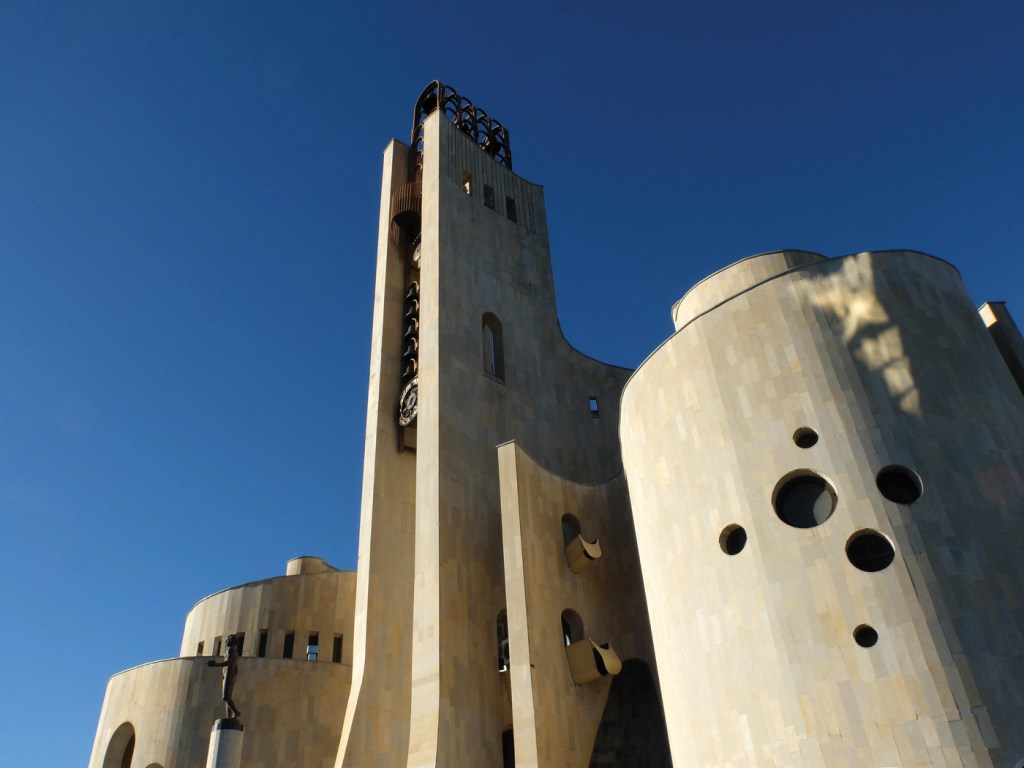
- Built in: 1894
- Designed by: Viktor Djorbenadze & Vazha Orbeladze
- Purpose: Designed as a secular wedding venue during the Soviet Era. Some have noted that the architects implemented masculine and feminine design elements to celebrate the union of man and woman.
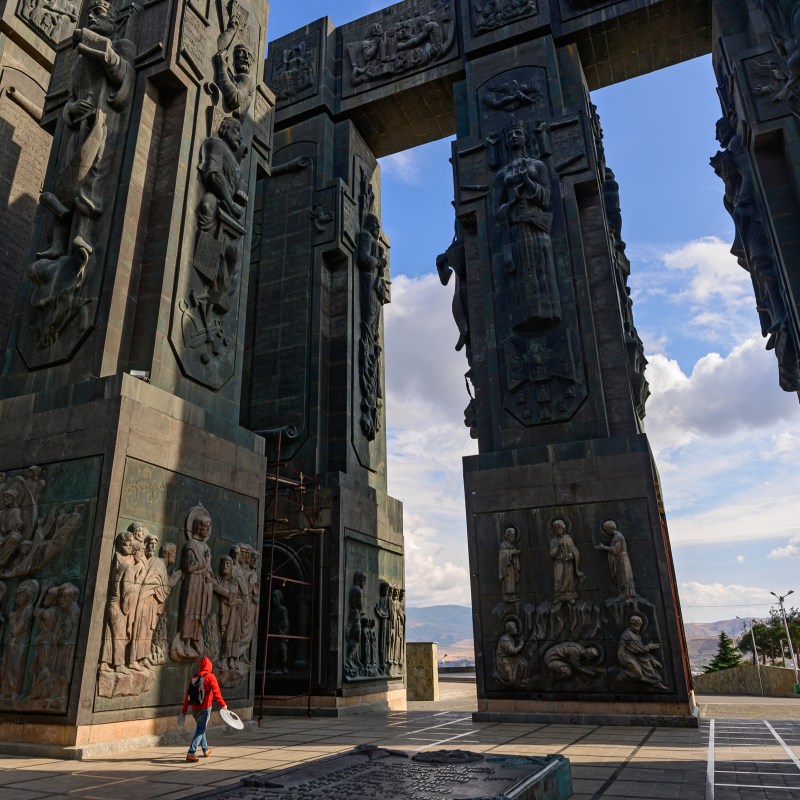
Chronicle of Georgia
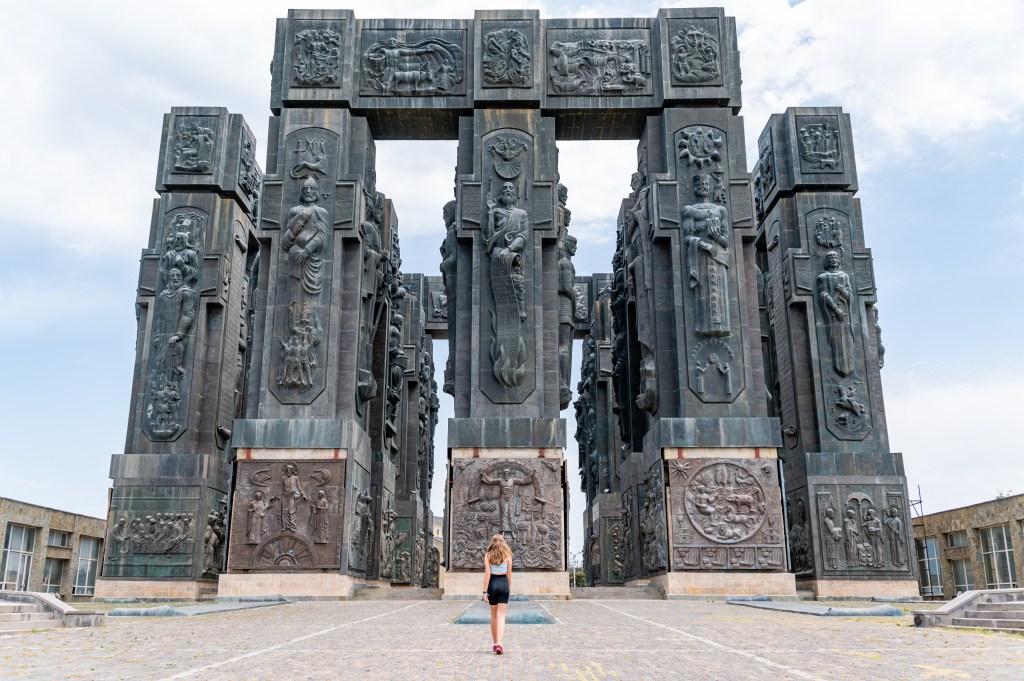
- Built in: 1985
- Designed by: Zurab Tsereteli
- Purpose: A monumental structure designed to celebrate Georgia’s 3,000-year history and its 2,000-year legacy as a Christian nation.
Bank of Georgia Headquarters
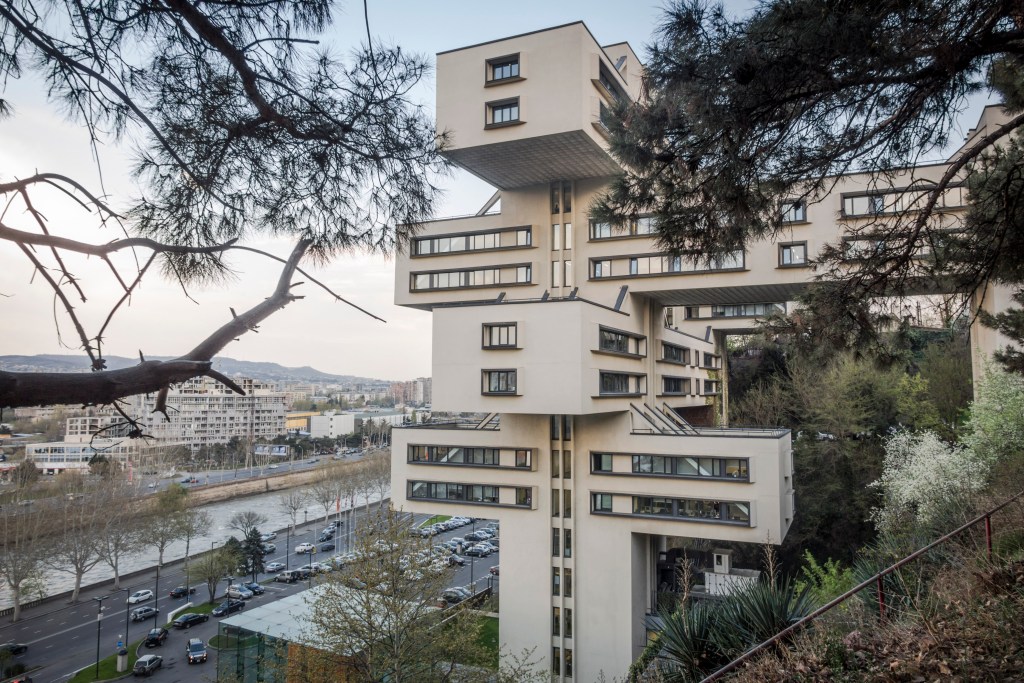
- Built in: 1975
- Designed by: George Chakhava & Zurab Jalaghania
- Purpose: Originally built as a hub for the Ministry of Highway Construction, this building was acquired by the Bank of Georgia in 2007.
Nutsubidze Skybridge
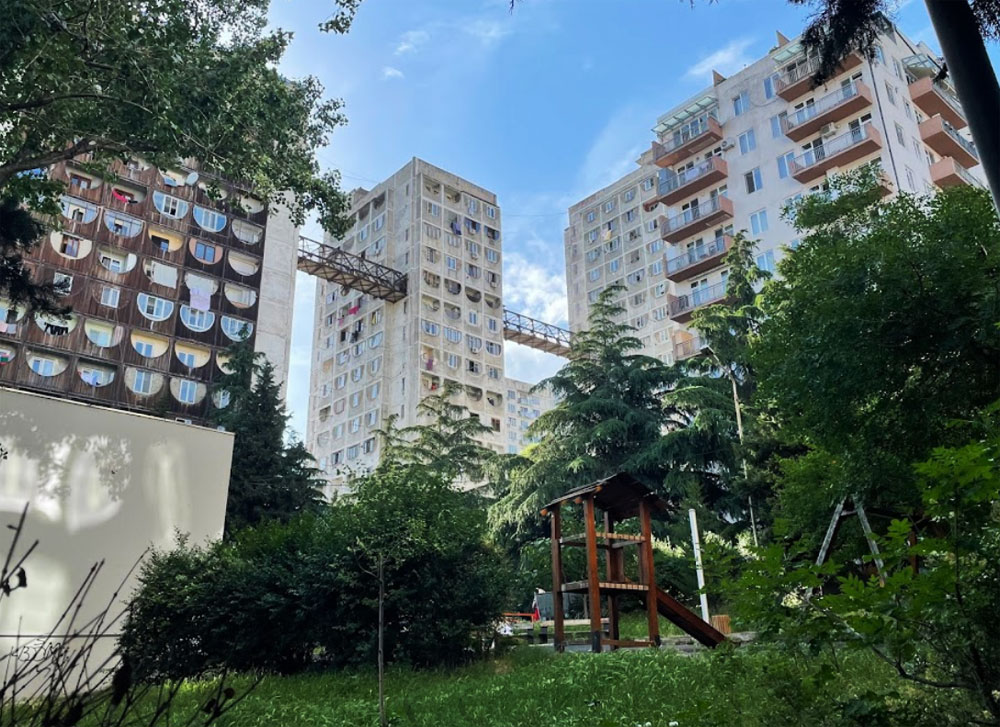
- Built in: 1976
- Designed by: Otar Kalandarishvili & Gizo Potskhishvili
- Purpose: To connect three residential buildings high above the ground, meaning residents wouldn’t need to take the elevator down to the ground floor to enter the other buildings. Today, it’s used for its panoramic views.
Bridge of Peace
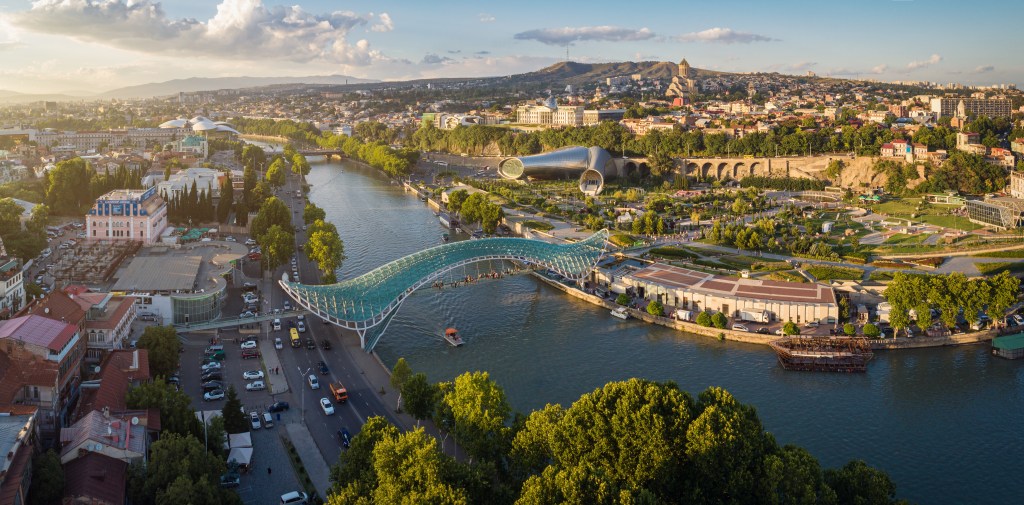
- Built in: 2010
- Designed by: Michele Du Lucchi
- Purpose: Provide a pedestrian walkway over the Kura River in Old Tbilisi, which also offers panoramic views of the city.
Orbeliani Baths
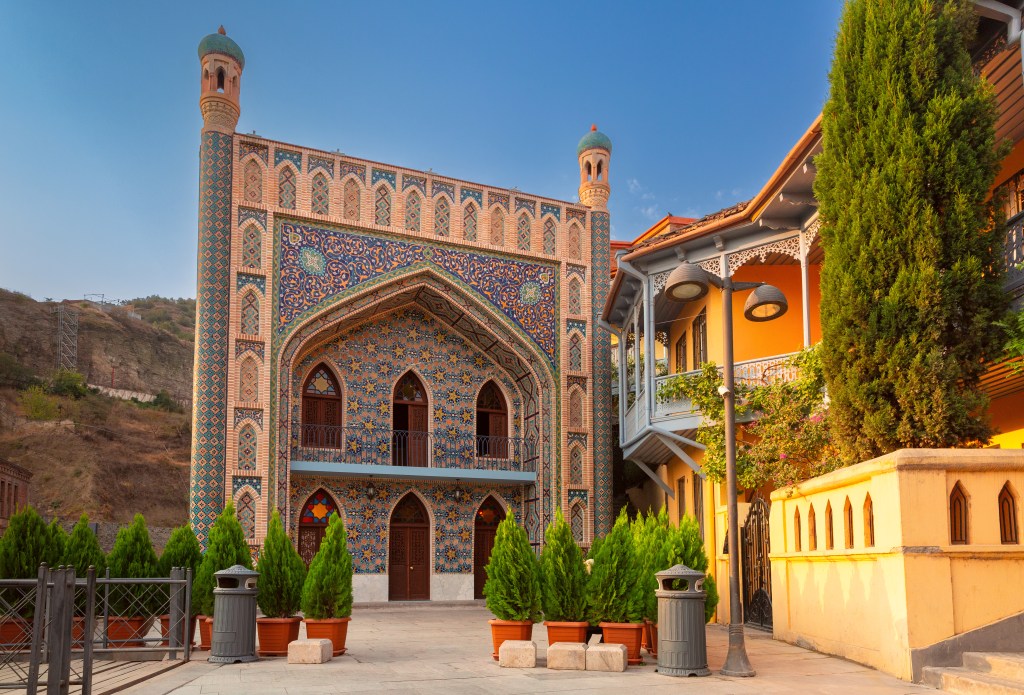
- Built in: 1893
- Designed by: N/A
- Purpose: A bath house with thermal pools, along with hot and cold sulfur pools, saunas, and traditional kisi body scrubs, which are made from wool.
Leaning Clock Tower
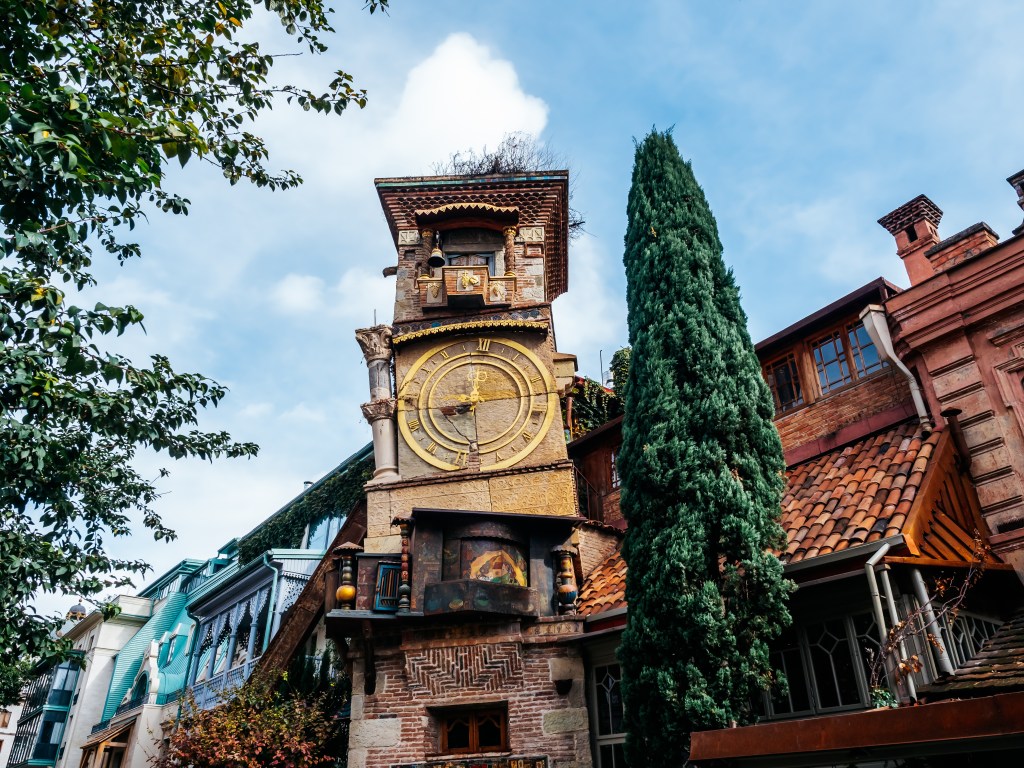
- Built in: 2010
- Designed by: Rezo Gabriadze
- Purpose: A passion project from a local artist that features an hourly mechanical show. The show consists of a golden-winged angel, who emerges from a tiny stained-glass door to hit a chime that declares the hour has changed.
Mother of Georgia (or Kartlis Deda)
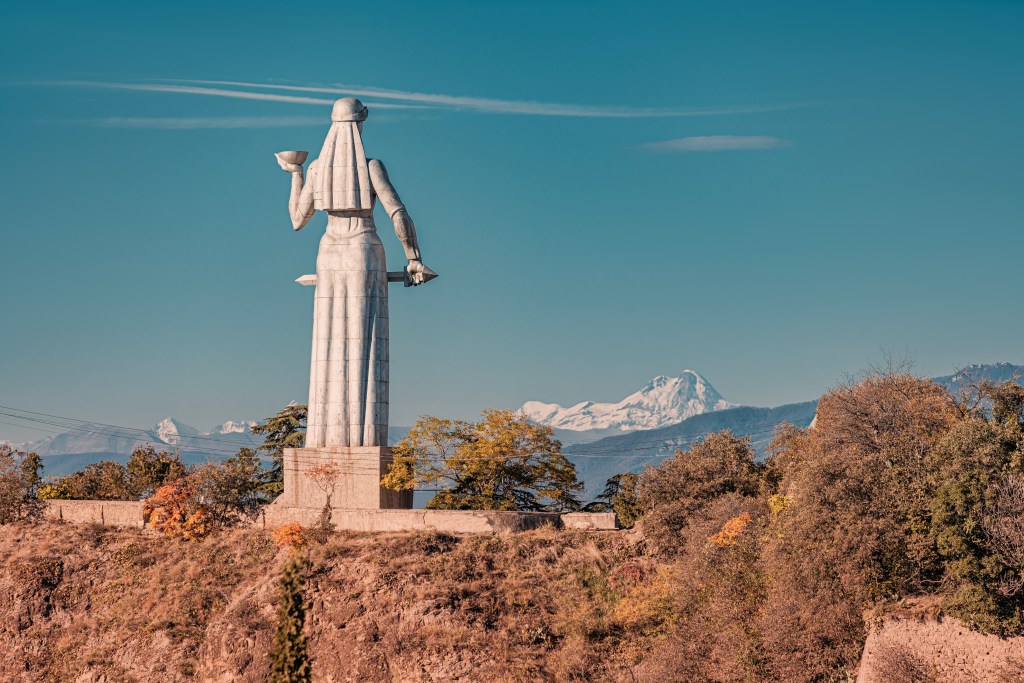
- Built in: 1958
- Designed by: Elguja Amashukeli
- Purpose: A sculpture from a local artist that was built to celebrate Georgia’s 1,500th anniversary. The figure is a woman in Georgian national dress, which is built entirely of aluminum.
Tbilisi Archaeology Museum
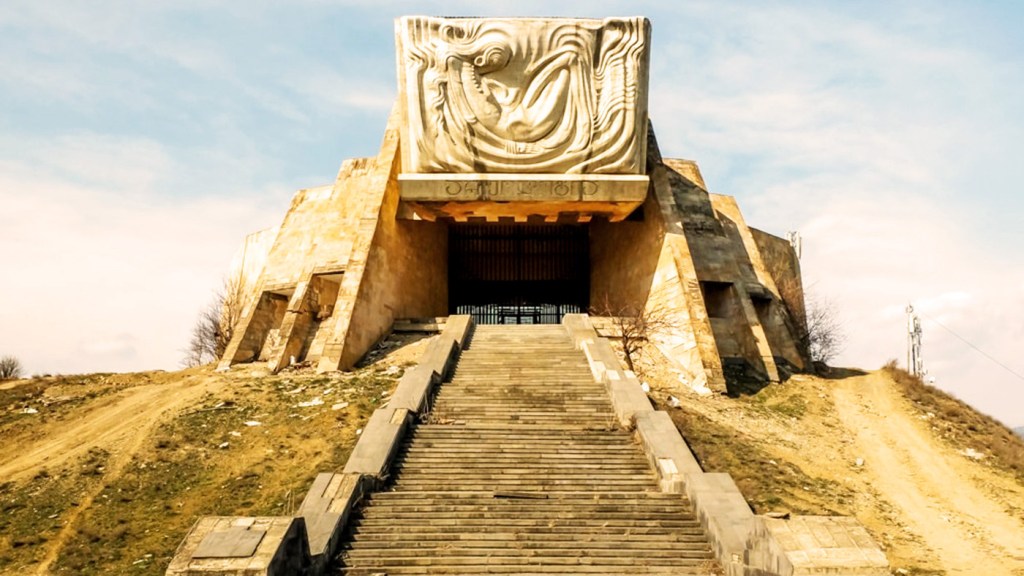
- Built in: 1988
- Designed by: Shota Kavlashvili & Shota Bostanashvili
- Purpose: To create a museum that houses ancient Georgian artifacts that showcase the country’s ancient history. However, it is no longer used and is non-operational.
Tbilisi State Academy of Arts
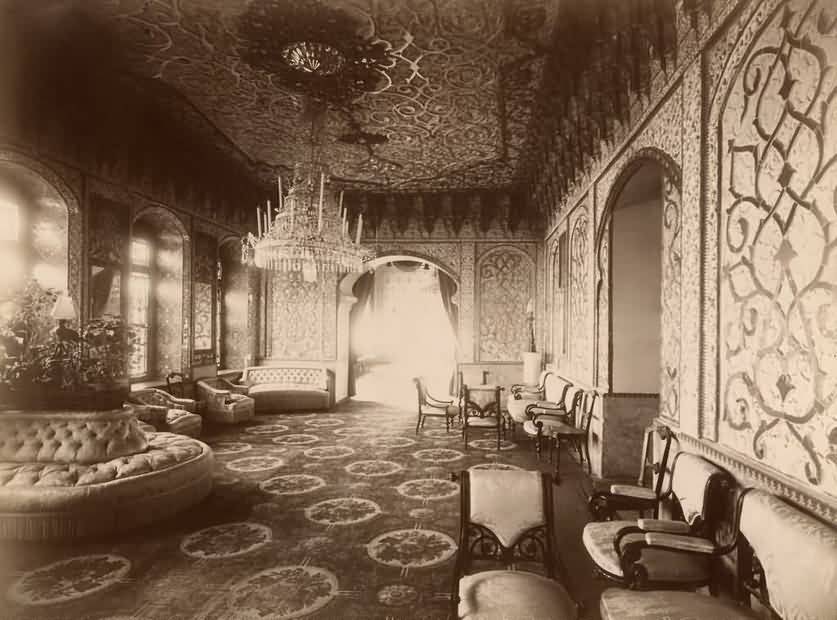
- Built in: 1922
- Designed by: The Academy sits inside a former mansion designed by Simon Kldiashvili
- Purpose: To educate Georgian artists in painting, sculpture, graphic arts, and architecture. The academy is set inside a mansion that was completed in 1902. It blends elements of European and oriental architectural styles.
