

Italy doesn’t play around with its tourist-facing fines. Despite the fact that the country has established itself as a tourist hotspot and has plenty of infrastructure in place for travelers, it’s also ramping up its responses to poor tourism.
Videos by TravelAwaits
While cities like Venice change their day trip rules and Milan bans lock boxes in public places, some municipalities have already laid out fines aimed at tourists who misbehave.
Here’s the catch: Those tourist laws in Italy could cost you a pretty penny. Worse, some of the fines are based on local culture, meaning Americans might not realize they’re overstepping.
If you want to avoid paying fees for breaking tourist laws in Italy, look out for these strange rules, which were researched and compiled by travel booking site Omio. You might not realize you’ve broken them until it’s too late.
(Side note: If you haven’t heard of Omio, they’re one of the best travel agencies to use to book train and bus fares in Italy. If you’re new to traveling by train in Italy, there are a few public and private companies that provide routes nationwide. Omio can help you figure out which to take, and when.)
2 tourist laws in Italy that could get you into trouble in more than one place
Don’t wear swimwear when you’re not on the beach or by the pool

I laid this out in an article I wrote about Mediterranean etiquette: Dressing well is important. That’s true even in smaller beach towns on the Italian coast. Wearing swimwear when you’re not at the beach is considered rude, which surprises many Americans because we tend to treat beach towns as clothing-optional.
Wearing swimwear in public (as in, not by the beach or by a pool) could earn you a €500 fine in places like Campania, Veneto, Tuscany, and Sorrento. Keep in mind that Campania, Veneto, and Tuscany are regions, sort of like states. Sorrento, meanwhile, is a town near Naples. In short, I’d advise putting on a slip or t-shirt and shorts when stepping away from a pool or beach anywhere you go in Italy.
Don’t feed the pigeons

Feeding pigeons is illegal in many European cities—but it’s really looked down upon in Italy. Pigeons pose a threat to historic monuments throughout the country and are also viewed as a public hygiene issue.
(I have a personal bone to pick with this—scientific studies have shown that pigeons are fairly clean. Meanwhile, I take my dog into public spaces up to four times a day so he can use the bathroom, making my chihuahua more of a threat to public health, in my humble opinion.)
Regardless of the public perception of pigeons, it makes sense that Italian cities struggle to keep them off precious sculptures, monuments, and buildings. The only way to keep pigeons off those must-see monuments is to put spikes on them—which ruins the magic for visitors. While Italy grapples with its pigeon populations, do your best not to feed them.
You’ll pay up to €500 in fines for feeding pigeons in Venice, Rome, and Florence. You’re likely to get called out in other places for feeding pigeons, too.
3 tourist laws in Italy from specific cities
Don’t eat outside public monuments in Venice

Venice has a €200 fine in place for those who decide to sit down and eat on monuments, steps, bridges, or even raised walkways. The same for drinking. The goal is to keep Venice’s limited space free, while also keeping it clean. Remember: crumbs bring rats and, despite Venice’s weird love of rats, nobody wants an infestation.
Don’t wear flip-flops (or other noisy shoes) in Capri

Capri is a small Italian island where you can enjoy historic architecture, blue seas, and flashy beach clubs. However, there’s a special tourist law that bans noisy footwear. From flip-flops that ‘snap’ to hard-soled shoes that ‘clack’, you could get a €50 fine for walking around too noisily.
Wear appropriate shoes when hiking in Cinque Terre
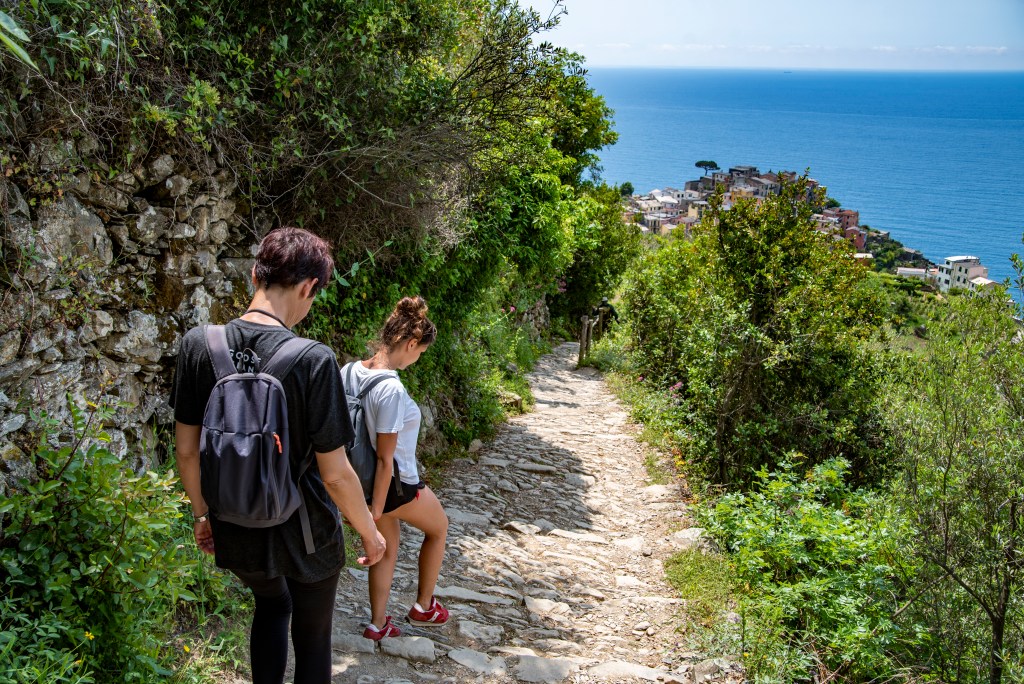
Of all the tourist laws in Italy, this one might actually drain your bank account. You could pay a whopping €2,500 for wearing inappropriate shoes when hiking around Cinque Terre. The steep, rocky trails are dangerous for hikers who show up unprepared. This fine is designed to promote safety.
