
Did you know that many European cities ban alcohol sales after a certain hour?
Videos by TravelAwaits
I was shocked to learn that many US cities do this, too. Being from Missouri, I hadn’t realized other cities, counties, and states weren’t as lax. (Missouri allows the sale of hard liquor in grocery stores, and there’s no state law banning open containers for drivers.) While most cities cut off sales around 2 am when bars close, many states and smaller jurisdictions have tight sales rules.
Wisconsin doesn’t allow alcohol sales after 9 am, while Indiana bans the sale of alcohol before noon on Sundays. Meanwhile, just south of where I grew up in Missouri, Arkansas is home to a whopping 30 dry counties (out of a total of 75).
Turns out, some cities in Europe have already taken note. Where I live in Barcelona, alcohol sales are banned after 10 pm (until 8 am). The same is true in Porto, Portugal, from 9 pm to 8 am.
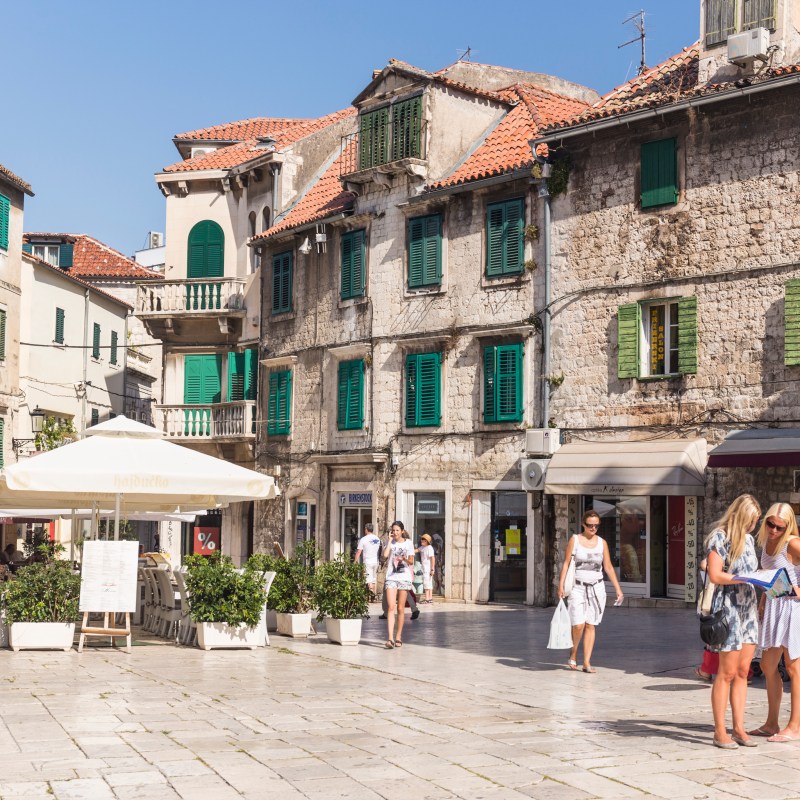
Most recently, Split, Croatia, joined the club by banning alcohol sales from 8 pm to 6 am.
Why did Split ban alcohol sales after 8 pm?
Split now bans all shops and liquor stores from selling alcohol after 8 pm. As with Barcelona and Porto, you can still drink in restaurants and bars—you just can’t buy a bottle of liquor or wine from a corner store or a grocery store. In Split, the new regulation is focused on the city center, but could expand.
What’s with the change? Once again, as with the tourist hotspots of Barcelona and Porto, the goal is to minimize rowdy activity and improve the quality of life for locals. Instead of creating an atmosphere where visitors (or locals) drink and gather in outdoor venues, they will instead be encouraged to drink at appropriate locations—like bars and lounges.
This helps minimize the number of public incidents, from noise complaints to safety concerns. As Split becomes a more popular destination, and Croatia does, too, tourism authorities are seeking to avoid being branded as another ‘party destination’, like Ibiza or Mykonos.
However, it’s unclear how much the fine is for breaking the rules in Split. At the moment, the new regulations are still facing a final vote from Split’s City Council. According to another report from Croatia’s Tportal, the new regulations in Split could spread to other cities like Makarska.
