
Whether you plan on counting cards like a blackjack shark (it’s legal) or simply spinning a few slot reels, you need to know a thing or two about casino etiquette in Las Vegas and other gambling hubs.
Videos by TravelAwaits
Even if you’ve been on a casino floor a few times, you might still have questions about the dos and don’ts. Some games have their own set of unspoken rules, while others are universal. Some areas of the casino floor are quiet, while others are all about thrills and celebrations.
A few mishaps can make you feel uncomfortable as you learn the ropes, but others might get you booted from the grounds.
Ready to learn about casino etiquette in Las Vegas? Here’s what you need to know to have a successful, enjoyable time gambling in the City of Sin—and beyond. Following these rules will signal to others that you know what you’re doing and aren’t going to interrupt the flow.
8 key points of casino etiquette in Las Vegas
Dealers vs croupiers
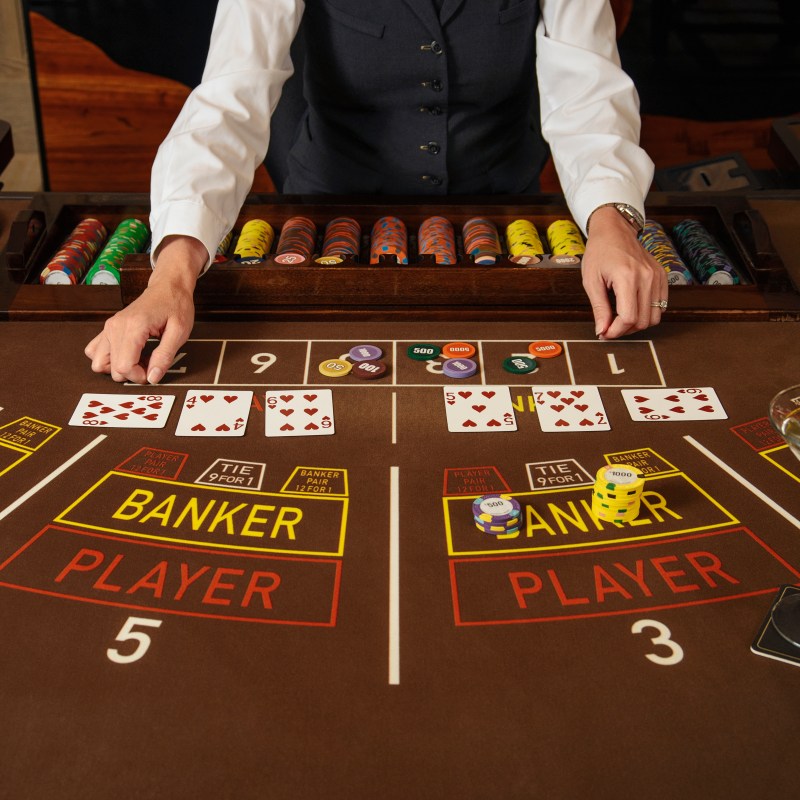
Dealers manage card games, while croupiers oversee every other game on the floor, including roulette and craps. This probably won’t get you into too much trouble if you mix them up, but I remember hearing the word ‘croupier’ for the first time at a casino and needing clarification.
Regardless of whether you’re playing with a dealer or a croupier, they are the ultimate referee and authority at the table. They’re not only responsible for making sure the game is played correctly—they also prevent rowdy players from interfering. There’s a lot that they manage, so be mindful of timing if you need to ask the dealer/croupier a question.
Tip the dealer
If you’re sitting down to play for a while, always tip the dealer. Usually, the more you win, the more you share with your dealer.
You might even notice that some players are superstitious about which dealers they play with. They might wait at a full table just to play blackjack or poker with a specific person—or avoid one because they had a bad run with them in the past. Even if you have a bad run and lose what you brought, you should still tip the dealer.
Tipping rates are based on how long you play, not how much you spend at the table. Casino etiquette in Las Vegas involves tipping around $5 an hour.
You don’t need to know all the rules—observe, listen, and ask
You don’t need to know everything about poker, blackjack, craps, roulette, and more to play. All you need to know are the basic rules and a few strategic points. That being said, while you don’t need to know all the rules to sit down and play, you might want to ease in.
It’s normal to watch games at tables, especially when they’re heating up. You can watch how others play, listen to advice (some players are chatty, more on this below), and even ask the dealer/other players questions. Just be mindful when you ask those questions—it should be between games or when there’s a lull in play, not during a live round.
No touchy
Watch your hands when you play at the tables in Las Vegas or another casino hub. Once a game is in play, you can’t touch your chips or cards, unless it’s your turn, in most cases. If you accidentally touch something or pick up something from the table, you could flag security and cause a long delay.
Here’s where observation is important again: If you’re relatively new to a game, observe how other players handle their cards and chips without being suspicious or obvious. If you’re confused about what you can and can’t touch, just ask—you won’t bother anybody with a quicker clarifying question like that.
Avoid ‘first place’ if you’re new to a game—and check out bet amounts
Again, if you’re new to gambling, take your time finding the right table. Don’t take the ‘first’ place next to the dealer or croupier if you need time to think. You’ll slow the game down, and other players won’t thank you for that.
Similarly, find a table where other players are betting a similar amount to you. It’s not uncommon to see a player with $5 chips betting next to someone with $50 chips, but you want to find your ‘match’ in terms of skill and bet amounts. You’ll feel more comfortable with like-minded players around you.
Plays can get political—and draw ire from other players
Have you ever tried surfing in a busy spot and realized that the local surfers aren’t going to share any waves with you? Gambling at a casino is kind of like that.
Most casino etiquette revolves around how to find your place as a newbie, but know that some players are going to be opinionated about what moves you make.
In some cases, your move might affect table probabilities. For example, I play blackjack, which is normally played based on statistical likelihoods. If you deviate from the norm, you could draw ire from other players. They want to play based on stats, so if I make a ‘wrong’ move, the odds for all players at the table could change.
Other players are allowed to have opinions and dislike the moves you make, but they don’t have the right to criticize or harass you. The dealer will step in if that happens. It’s more likely the player will roll their eyes and find another table if they think you’re messing with their odds of winning. Don’t let it get to you.
Hot slots
Slots run on a first-come, first-serve basis—and many players like to ‘heat up’ games by playing them for a long period of time. The idea is that if they sit down and spin the reels for three hours, they’re guaranteed a win because the machine is more likely to pay out. If there’s a jackpot involved, players might stick around even longer in hopes of a big win.
If you see a personal article on a slot game, from a coat to a drink, leave it. Someone has ‘claimed’ that seat, and might just be gone for a bathroom break. If you sit down, spin the reel, and win, players who were ‘heating up’ the slot might have something to say to you—if not cause a scene.
Slots vs tables
This doesn’t necessarily relate to casino etiquette, but it’s a good place to mention: Gamblers separate themselves into slots players and everyone else. Slots are viewed as a game of pure luck, while card and table games are viewed as being slightly more skill-based.
