
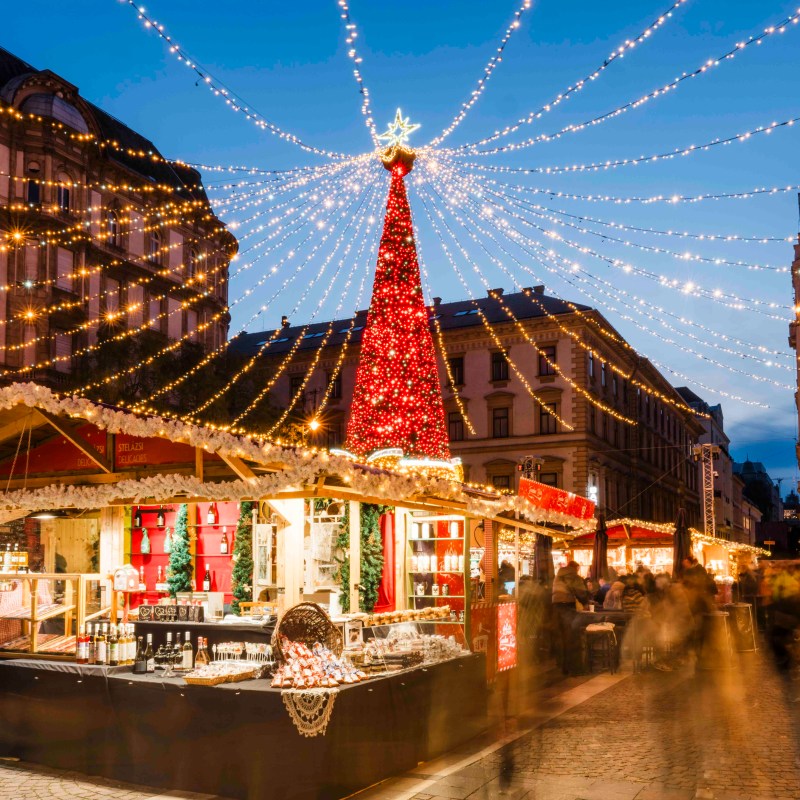
The United States isn’t short on fantastic Christmas markets—from traditional German fare to family-friendly festivals.
Videos by TravelAwaits
Still, I’ve found European Christmas markets to be pretty unbeatable, especially in cold-weather zones like central and northern Europe. From London to Krakow to Rovaniemi, there are Christmas adventures to be had—and there are dozens upon dozens of Christmas markets to explore.
That being said, they aren’t quite like their North American counterparts. Our Christmas markets are inspired by those in Germany, the Netherlands, and Switzerland, just like our Christmas traditions come from Europe. In short, you’re bound to notice a few differences.
If you want a head start on what to expect at European Christmas markets, I’ve got tips on what to eat, how to spend your money, and what not to do. While the festivities are closely related to North American markets, there are a few differences you should keep in mind. I’ve broken down my tips into these categories: food, stalls & vendors, and ambiance. These tips will help you get the most out of your experience.
What to expect at European Christmas markets: The food & drinks
Regional specialties
Depending on which Christmas market you visit, you’re bound to be treated to regional specialties. I highly suggest doing a little bit of research beforehand or asking around at the market to learn about these specialties. For example, Munich specializes in Stollen and Marzipan. In Barcelona, where I live, turron and polvorones are available at markets. Always go for the regional treat!
Gluhwein or mulled wine
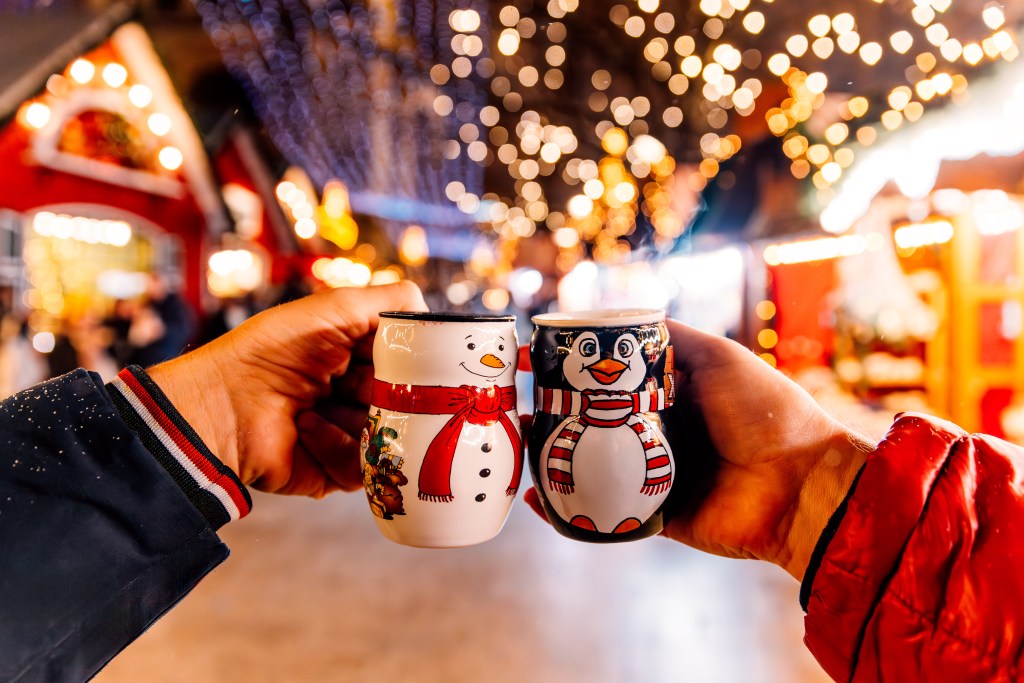
In case you haven’t heard about mulled wine (also called Gluhwein), it’s a red wine-based drink that is simmered with spices for hours. You can’t say you’ve visited European Christmas markets if you haven’t sampled the mulled wine. Bonus points if you add a shot of liquor to it!
Hot chocolate
In the United States, we enjoy a nice, milky hot cocoa. In many parts of Europe, locals prefer a thick, creamy hot chocolate. If you’re a fan of cocoa, don’t miss out. And don’t be surprised if you’re served a heavy cup of hot chocolate.
Chestnuts
Roasted chestnuts are a running theme at European Christmas markets. They’re usually served warm in a paper cone. They’re already shelled—you just eat the soft, warm innards. Possibly with a little bit of honey on top.
Drink and eat to stay warm
Having visited Poland in winter multiple times, I can tell you this: eating and drinking well at European Christmas markets is partly about staying warm. If you’re heading north, know that sipping on Gluhwein is one of the best ways to maintain your core body temp. Stuffing your face is a close second.
Don’t ask for changes to orders
Here’s a friendly reminder: Making adjustments to your food orders isn’t always welcomed in Europe. You might notice the same at Christmas markets if you try to alter a food or drink order. Most stalls have limited supplies, meaning they might not be able to make adjustments for you.
What to expect at European Christmas markets: The stalls & vendors
Regional specialties
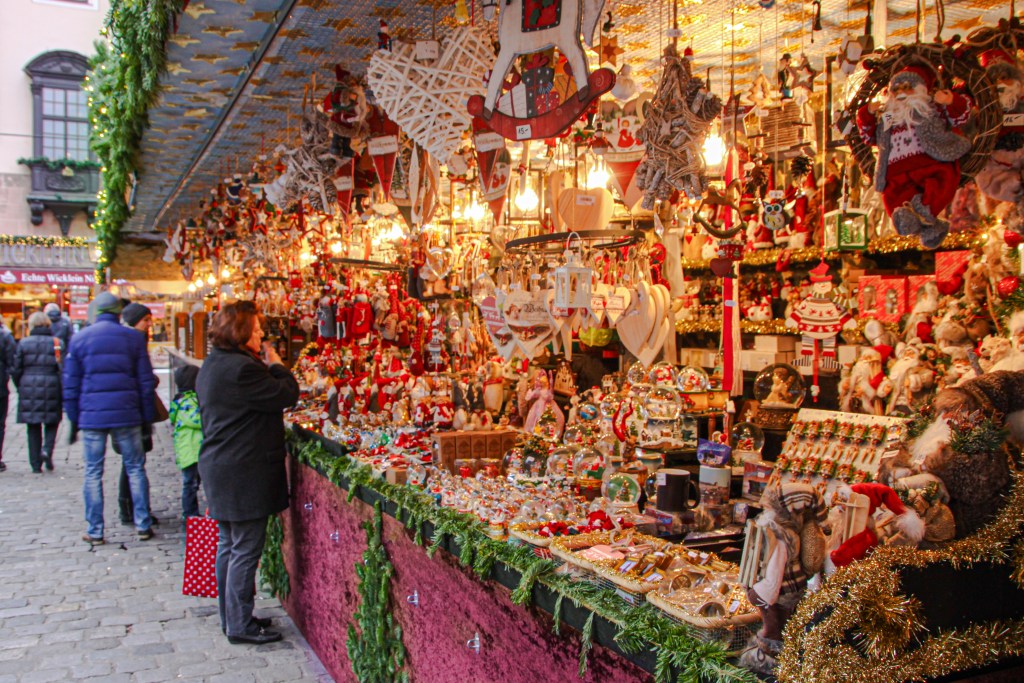
Once again, I must insist: Do some research on European Christmas markets before you attend to figure out what they specialize in. You can also ask vendors at the market or your hotel concierge. Using the example of Barcelona again, you can find unique regional specialties like the Caganer and Caga Tio. Both are poop-themed. Welcome to the magic of Christmas.
The handcrafted angle
Here’s another suggestion: Focus on mom-and-pop stalls. Unsurprisingly, it’s difficult and pricey for vendors to secure their stalls at many larger European Christmas markets. When you spend your money buying goods that are handcrafted, you support local artisans. You also help them make ends meet for the year, since Christmas is a busy shopping period.
Bring cash
The vast majority of Christmas markets allow you to pay with a card, but some vendors might prefer cash. That’s especially true for smaller purchases. I always recommend bringing cash for smaller purchases.
Don’t haggle—and don’t take up space in front of stalls for too long
There’s not much to say here except that European Christmas markets aren’t places to haggle on prices—unless a vendor initiates. I also want to remind you not to take up space in front of stalls for too long if you aren’t shopping there. Again, it’s an important time for local vendors to make money while you enjoy the spoils of Christmas festivities.
What to expect at European Christmas markets: The ambiance

Expect crowds—unless you go later in the year
If you’re visiting European Christmas markets in December, expect crowds for hours. You can usually dodge the heaviest foot traffic by visiting before the sunsets. I also recommend visiting Christmas markets in January and February. Many stay open for more than the Christmas season, making them more general holiday markets. Even if the stalls are gone, food and drink vendors might stick around for a while.
Look up performances and events
Most American Christmas markets close up after the holiday, but that’s not the case in Europe (like I just pointed out). Plus, many European Christmas markets include performances, traditions, and live events that you can join. Just like I recommend looking into regional specialties, I also recommend looking up schedules for the Christmas market. From carolers to tree-lighting, there’s tons to do.
Get a view from outside the market
If the Christmas market is a little too crowded, you’re a little too cold, or you’ve already done your shopping but want to hang around, I recommend booking a table at a nearby restaurant or grabbing a stool at a bar. You can enjoy the ambiance from afar while you grab a bite to eat or drink. It keeps the fun going just a little bit longer.
Go back
Who says you can’t go back to the Christmas market? If you didn’t find the gift or treat you wanted, or felt overwhelmed by the crowds, don’t forget that you can always go back. Once again, I recommend visiting the market during the day if you feel a little too crowded at night. They’re also a picturesque spot to grab a drink before heading out to a dinner, show, or other event for the evening.
