
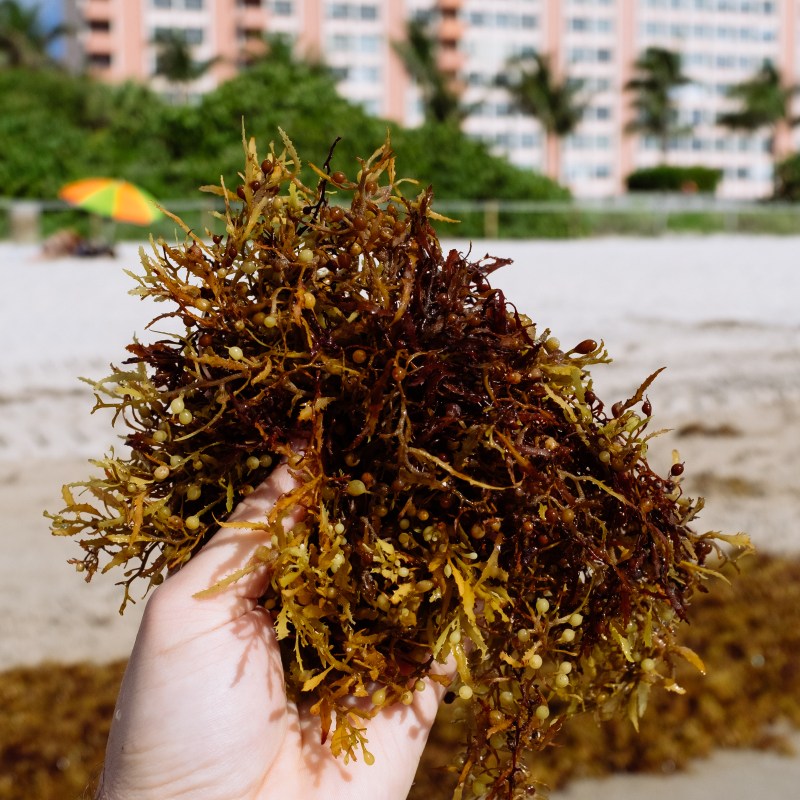
Sargassum has become one of the most problematic natural occurrences for beachgoers in the Gulf of Mexico, and even in parts of the Atlantic.
Videos by TravelAwaits
Sargassum is a type of algae that floats on the ocean’s surface. There’s good news about sargassum: it’s ecologically important because it provides shelter and food to marine life, including newborn fish, turtles, and more. But there’s bad news, too: while a few sargassum deposits are okay, the last decade has seen larger blooms that are disrupting beaches across the Caribbean.
According to the University of South Florida, sargassum blooms picked up in 2013. As early as 2018, the university (along with other scientific groups) began tracking sargassum blooms using advanced tools to measure their size and impact, along with predicting incoming deposits.
Thanks to this work, travelers can now use tools like the Sargassum Tracker to take a closer look at beach conditions across Mexico.
But this year’s deposits are record-breaking, meaning you might even see them as far north as Florida. Here’s what we know about this year’s sargassum trends, and what you need to know if you’re visiting a beach in the Caribbean this year.
Inside 2026’s sargassum predictions
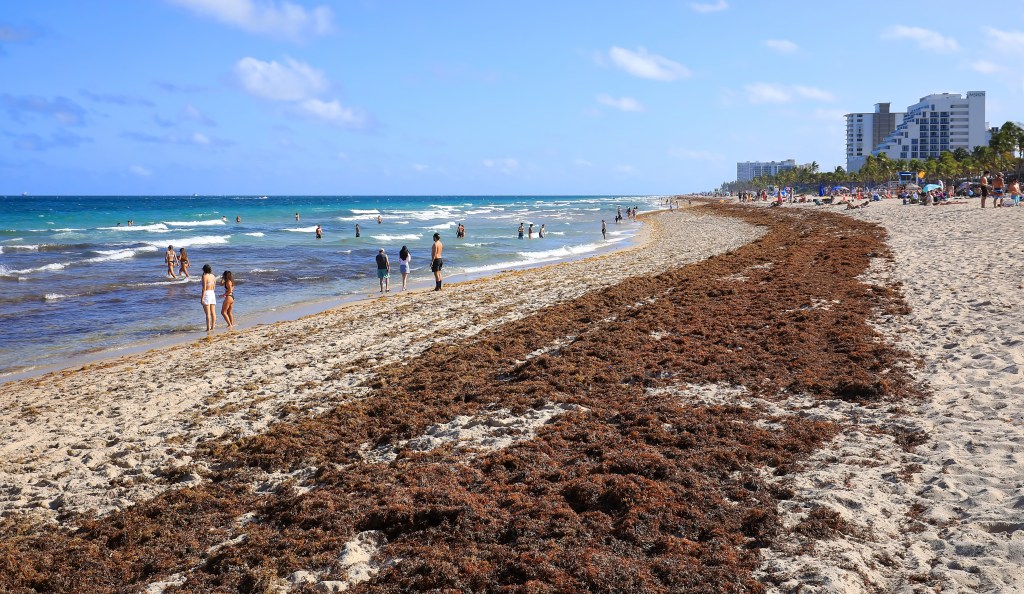
Researchers from the University of South Florida have noted that sargassum deposits in March set new records. Any blooms that jump to more than 75% of historic amounts are considered ‘major’, which have continued annually since 2018.
According to the university’s May 2026 report, sargassum deposits in the Gulf of Mexico, the West Caribbean, East Caribbean, and the East Atlantic all showed record-high sargassum blooms. Only the West Atlantic area showed a smaller mass compared to previous years.
Here’s what that means in layman’s terms: Scientists are predicting that blooms could reach the Caribbean and Lesser Antilles, along with the Florida Keys and the East Coast of Florida. Sargassum deposits could also enter the Gulf of Mexico, including beaches in Texas and Louisiana.
If you’re visiting the East Coast of Florida or the Florida Keys in June or July, which are the heaviest months for sargassum deposits, expect to find algae on the beaches. The same is true across Mexico’s Caribbean coast. You might also notice blooms on the beaches of Texas and Louisiana.
Doctors also recommend avoiding beached sargassum. The algae releases harmful chemicals as it decays, including hydrogen sulfide.