
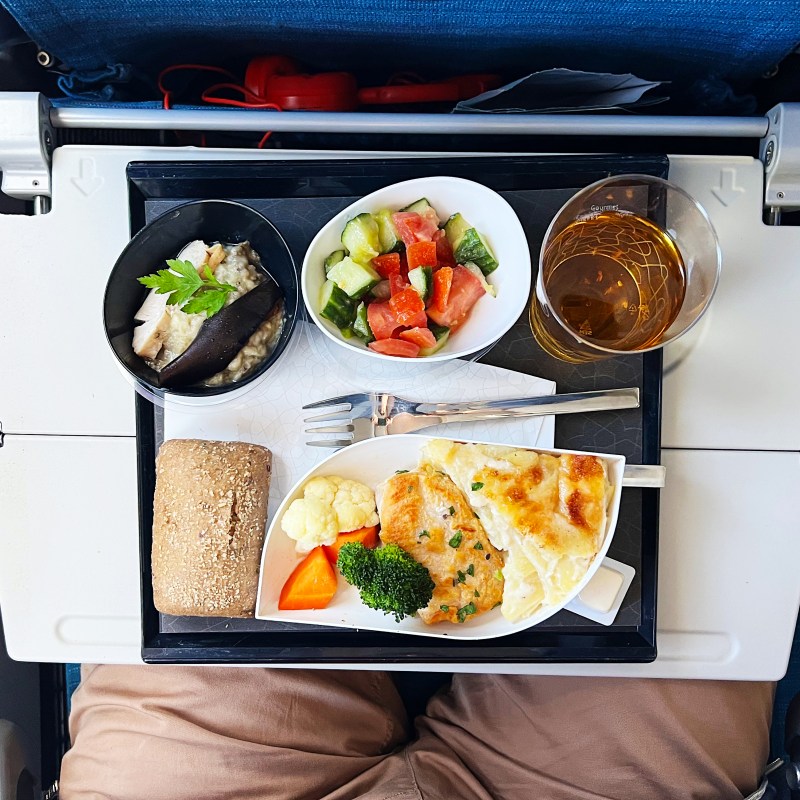
I tend to avoid plane food because I bring a small arsenal of my own snacks on the plane.
Videos by TravelAwaits
During long-haul flights, my focus is on staying dehydrated, getting up to stretch my legs, keeping my mind engaged with tasks or entertainment, and eating things I know will nourish my body. For me, that’s dried fruit, nuts, and hearty snacks like banana bread.
Still, depending on what’s on the menu, I might eat part of my meal(s) provided by the airline. I avoid meat at all costs, but airlines always have a veggie option ready these days.
The big question is—should you eat airplane food? It’s a hot topic that’s on par with questions surrounding airplane coffee and tea. While meals, like coffee, are absolutely safe for consumption, will they do more harm than good?
Let’s explore the art of knowing when to eat plane food from the perspective of qualified doctors who know a thing or two about a good gut.
Should you eat airplane food? Here’s what doctors have to say about it
Be wary of flying on an empty stomach
Let’s kick things off with flying on an empty stomach. According to a registered dietitian at Parkview Health, Hannah Thomspon, recommends eating something on a long flight—even if it’s the ‘wrong ’ thing. In a statement to Travel + Leisure, Thompson says that avoiding food will lead to fatigue. That fatigue can make it harder to recover from long flights, and can even increase issues like nausea.
So, if you’re prone to blood sugar crashes and struggle to recover after long flights, you might consider eating plane food rather than going on an empty stomach. (Or bring your own snacks, if you know you’ll avoid the plane food.)
Here’s the rub on plane food: it has many additives
Now, let’s dive into what’s going on inside those dishes. According to BBC Breakfast contributor and healthcare professional Dr. Rangan Chatterjee, plane food has more salt and seasoning than an ordinary dish. These are added to preserve flavor at high altitudes, which compromises our palates thanks to reduced air pressure and dry cabin air.
Airplane food is also processed, meaning it’s full of not just salt but also sugar and preservatives. They’re also low in fiber and, in general, nutritional content.
In other words, plane food is zhuzhed up to make it more appealing. Despite the acceptable flavor, the food might not offer any substantive nutritional value, meaning it’s just designed to make you feel full.
Try to avoid foods that cause bloating and swelling
Two primary issues caused by plane food are bloating and swelling. The latter is thanks to the high sodium content in plane food, which makes it more palatable at high altitudes. Anyone who is prone to swelling when taking in high amounts of salt should steer clear of plane food.
Even if you’re okay with the sodium, you might also want to avoid certain types of plane meals. Look for foods that cause gas and bloating. These include beans, lentils, broccoli, cabbage, and even carbonated drinks.
Lastly, try to avoid meat when possible. Meat is often processed at higher rates in order to maintain temperature and quality control. However, veggie dishes like pasta are usually subject to fewer chemical interventions, making them less processed and easier for your gut to handle.
Know that it’s all FDA-approved
As with coffee and tea served on planes, airplane meals are subject to testing. They’re all FDA-approved or, when talking about international airlines, are subject to management by health authorities. In other words, the food is being tested for safety, and the meals you receive on planes have all passed.
Hydration could make the difference between feeling good or bad
Finally, doctors are overwhelmingly in favor of drinking lots of water on planes. They recommend switching out caffeine, alcohol, and carbonated beverages for plain old still water. (Even carbonated water can cause bloating and gas on flights.)
Some recommend starting hydration before getting on a flight. If you prefer to eat a meal at the airport before boarding the plane, double down on the amount of water you drink. It will set your body up for a better experience flying at 35,000 feet. It will also make it easier to digest any plane meals you choose to eat.
