
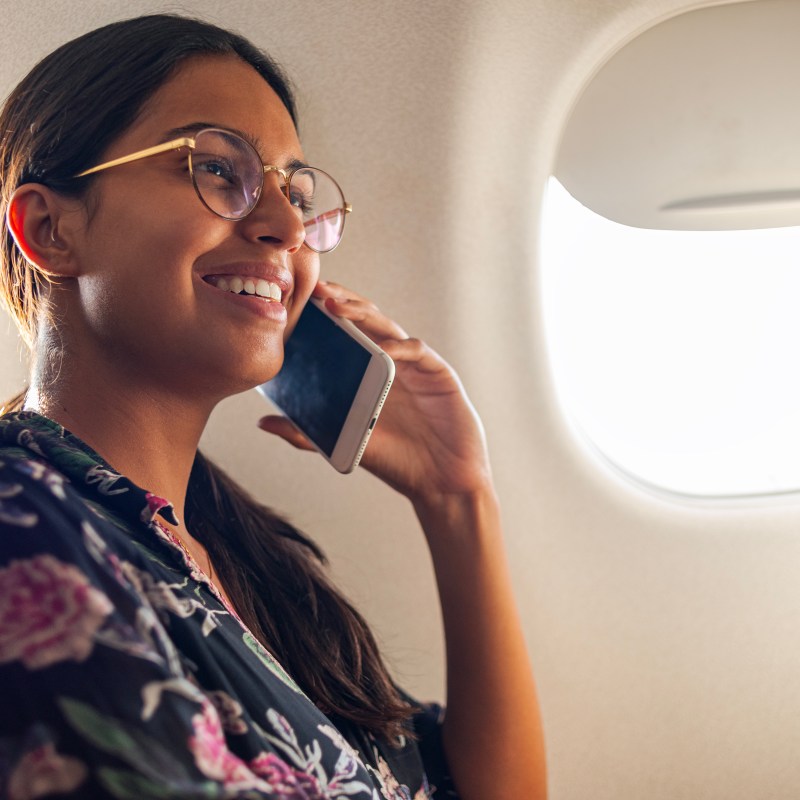
It’s hard enough to imagine someone not switching their smartphone into Airplane mode when the plane takes off. It’s even harder to picture someone receiving a call and then answering.
Videos by TravelAwaits
Turns out, the future of in-flight phone calls isn’t so distant.
On March 19, 2026, British Airways launched its Starlink Wi-Fi, offering reliable, high-speed internet to passengers. This launch marked the first integration of Starlink for the airline, which uses satellites to offer high-speed service around the world, even in remote areas.
The airline has plans to roll out additional Starlink-powered flights over the next three years to cover its whole fleet. This new development will ensure British Airways passengers have access to some of the world’s fastest internet as they fly through the sky.
In fact, Starlink is powerful that in-flight calls are possible. Previously, in-flight Wi-Fi could support video calls, including those on Zoom. Delta Air Lines, for example, makes announcements shortly after its safety instructions to clarify that video calls and chats aren’t allowed using Wi-Fi.
British Airways, however, has officially declared that in-flight phone calls are a go. Turns out, it’s a controversial call.
British Airways allows passengers to make in-flight calls—but is it the right decision?
According to the British Airways website, phone calls using Starlink Wi-Fi are allowed—so long as the passenger uses headphones and uses a quiet voice. The announcement has caught the industry off-guard, as the FCC has prohibited phone calls from cell towers on flights because they cause interference.
Now that Starlink has made in-flight phone calls possible, the big question is—should passengers be making calls while on flights?
One pain point for air travel is noise. On February 27, 2026, United Airlines updated its passenger contract to prohibit watching videos and video content without headphones. The goal is to maintain a safe, relaxing atmosphere in the cabin.
Phone calls could generate noise complaints from other passengers. In my experience, noise is also cultural. Passengers from countries and regions where it’s common to speak in a loud tone, even in compact spaces like cabins. Even passengers who speak in a lower voice might find that they need to speak at a higher volume, given how noisy planes are.
Seat sizes are also shrinking. It’s hard to eat a meal when sitting in economy without bumping into your neighbor. Noise spilling over into the next seat
On the other hand, passengers have often conversed with one another during long flights. Strangers make friends, groups traveling together chat it up. Whether or not in-flight Wi-Fi phone calls cause more noise than these conversations remains to be seen.