
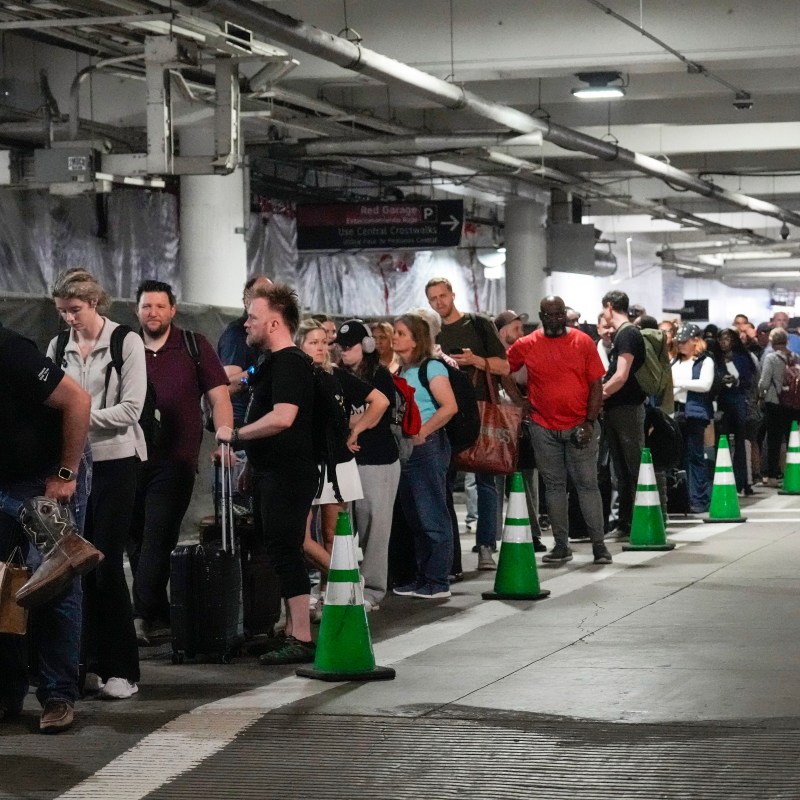
In the midst of yet another government shutdown, albeit partial, it’s the perfect time to talk about what to do when everything goes wrong at the airport.
Videos by TravelAwaits
After all, facing security lines that could stretch up to four hours long and booking flights that might be rescheduled, delayed, or canceled due to route changes is unprecedented territory. Or, at least, it was when the 2025 government shutdown wreaked havoc on air travel nationwide.
In 2026, it’s time to prepare for ongoing government shutdowns. Obviously, we hope they don’t happen—but you’ll feel a lot better about traveling during partial or full government shutdowns with a few pieces of advice and information in your back pocket.
These are the most important airport tips during government shutdowns that can help you navigate long lines, cancellations, and more.
A closer look at what happens at airports during government shutdowns
Before we cover tips, let’s take a closer look at why air travel is so susceptible to delays and even a little mayhem due to government shutdowns.
A government shutdown occurs when Congress or the President refuses to sign funding legislation. Usually, and unsurprisingly, hiccups occur on partisan topics. Because opposing parties don’t agree on finalizing funds and how to allocate them to federal bodies, the government withholds all funding.
In short, it’s a money problem. The government shutdown that occurred in 2025 and ran for 43 days happened because Congress couldn’t decide on federal funding for 2026. Now, the ongoing shutdown is due to disagreements on how to fund federal agencies like ICE and CBP, which are overseen by the Department of Homeland Security or DHS.
The government shutdown effectively freezes spending. That disrupts air travel because multiple federal agencies are responsible for managing air travel.
The most important is the ATC or Air Traffic Control, which is overseen by the Federal Aviation Administration or FAA. The FAA is overseen by the Department of Transportation, or DOT. The second-most important is the TSA or Transportation Security Administration, which is overseen by the DHS.
When federal funding is cut off, ATC and TSA employees aren’t paid because all federal funding is frozen. Last year, neither ATC nor TSA workers were paid during the shutdown. This time around, because the shutdown is tied to the DHS only, ATC workers are still being paid—but not TSA employees.
5 airport tips during government shutdowns
Consider rescheduling based on location & duration of trip
Here’s the short of it: You might be better off rescheduling your trip, depending on two different metrics. First, consider the airports you’re flying in and out of. If they’re experiencing long security lines, that’s your first sign to try to reschedule your trip.
If you’re traveling for a short weekend-long getaway, you might also consider rebooking, if possible. You’re going to shave precious time off your two or three-day escape by getting to the airport hours early to ensure you can make your flight.
That being said, you might not be able to change your flights. During last year’s full government shutdown, the FAA cut down on the number of flights leaving airports. Major airlines like Delta allowed passengers to make changes to existing tickets for free at that time—but there’s no such offer on the table for the current ongoing 2026 shutdown.
When planning, buy travel insurance and/or flexible tickets
If you’re booking flights that will likely take off during a government shutdown, consider getting travel insurance and/or booking flexible tickets. Travel insurance will help you recoup any losses on hotels, car rentals, and other travel-related expenses—but make sure you read the fine print to know whether you’re covered by partial government shutdowns.
Remember: When the FAA limits the number of flights that can take off, you have more rights with airlines. Last year, United and Delta both offered free rebookings for affected travelers during the full shutdown. But when there’s a partial shutdown that’s only affecting security lines, you have fewer air travel rights when it comes to rescheduling and making insurance claims.
Monitor updates for airports in question & download the MyTSA app
Not all airports in the United States are being affected by the partial government shutdown right now. Hours-long security lines have been an intermittent problem, meaning it’s hard to predict which airport will get slammed next. I recommend monitoring updates for the airports that you’re flying in and out of.
You can do that by following the airport on social media and in local publications. Another smart move is downloading the MyTSA app. The MyTSA App has a security line estimate for each airport, which is updated every fifteen minutes using real-time information.
Use airline apps to stay updated on delays and changes
Here’s one of my perennial pieces of advice: Always have the airline’s app downloaded on your phone. This is important for me because I fly Delta, meaning I have all the resources I need to rebook, reschedule, or cancel my flight in the app. If my existing flight is delayed or cancelled, the app is the fastest way for me to find a solution.
Even if you booked with a third party, I recommend downloading all the apps involved. For example, if you booked your flight on Expedia, have the Expedia app downloaded, along with the airline’s app. And make sure both companies know how to get in touch with you (via phone, email, or text) in case something comes up.
Don’t bank on PreCheck or Global Entry—they might not always be live
Because I don’t travel in and out of the United States more than three times a year (I live in Spain), I don’t have TSA PreCheck or Global Entry. At most, I’ve waited an extra thirty minutes or so in security and customs lines because of this, meaning neither program is on my radar.
However, if you’re someone who banks on TSA PreCheck and Global Entry to shave time off your wait times, think twice. During government shutdowns, both are subject to temporary suspension. For example, during the more recent government shutdown, TSA PreCheck was shut down due to staffing shortages. In other words, if the TSA is short-staffed, that’s one of the first services to get cut.
