
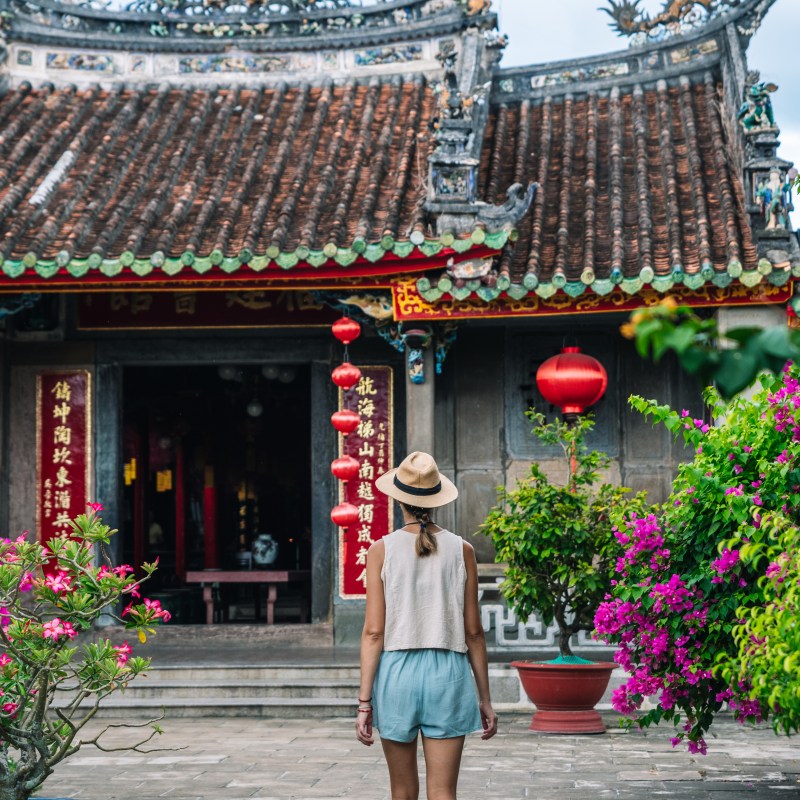
Compared to nearby tourist destinations like Thailand and Bali, Vietnam isn’t quite as accessible for tourists.
Videos by TravelAwaits
Most of its infrastructure is designed for backpackers staying in hostels and guesthouses. While Vietnam has been on the global travel radar for decades, it’s rarely the first Southeast Asian country Americans visit. It’s also culturally distinct from nearby nations thanks to its heavy confluence with Chinese culture, stronger emphasis on folk religion (like ancestor worship and local deity worship), and its recent geopolitical history.
In short, you might want a quick intro to Vietnam. Even if you know that you want to visit Ho Chi Minh City and Hanoi, its two largest cities, you might want a few pointers on which other destinations are worth your time.
Here’s your rundown on places to visit in Vietnam. I’ve divided my recommendations by general regions, including the north, central, and southern areas of the country. Remember: You can easily take a flight between the cities or, like I did, take an overnight train.
Places to visit in Vietnam in the south: Ho Chi Minh City & Phu Quoc Island
Ho Chi Minh City
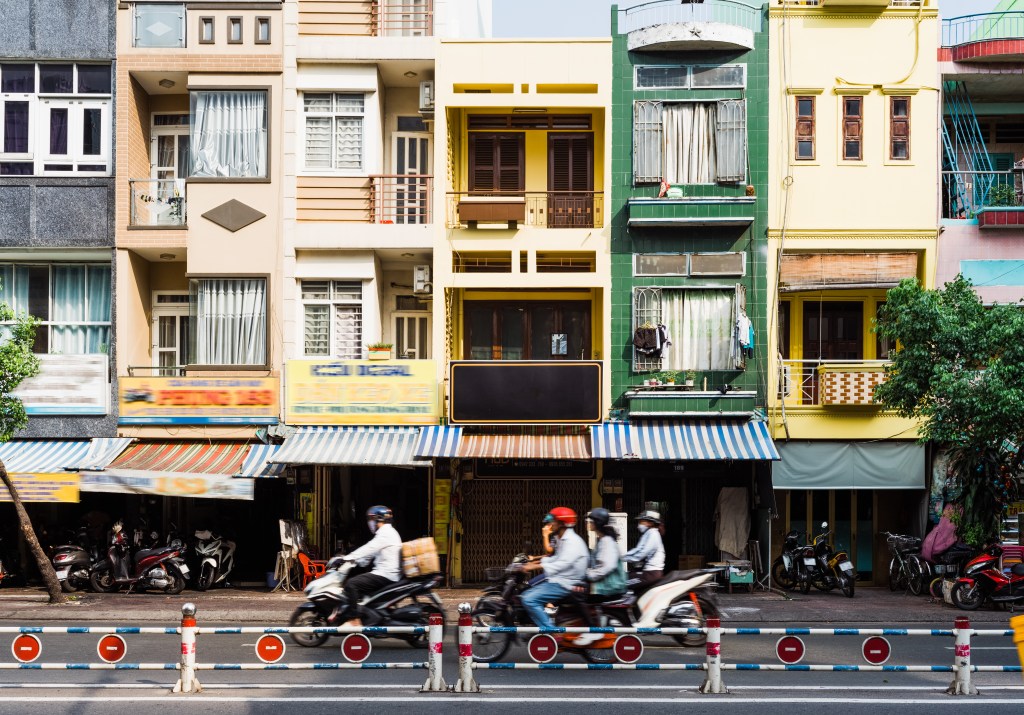
Ho Chi Minh City is the largest city in Vietnam—but it’s not the capital.. It’s the cheapest place to fly into, and has a wide range of budget to luxury accommodations.
Here’s where you can take a bite out of Vietnam’s history and culture. There are landmarks and museums to explore, from the War Remnants Museum to Independence Palace. You can also check out French colonial architecture, which is most heavily concentrated in the city’s downtown area.
Street life is also big in HCMC. You can drift between casual bars and street food stalls for hours, and enjoy nightlife that doesn’t stop until the sun comes up. Most locals still call the city Saigon.
Phu Quoc Island
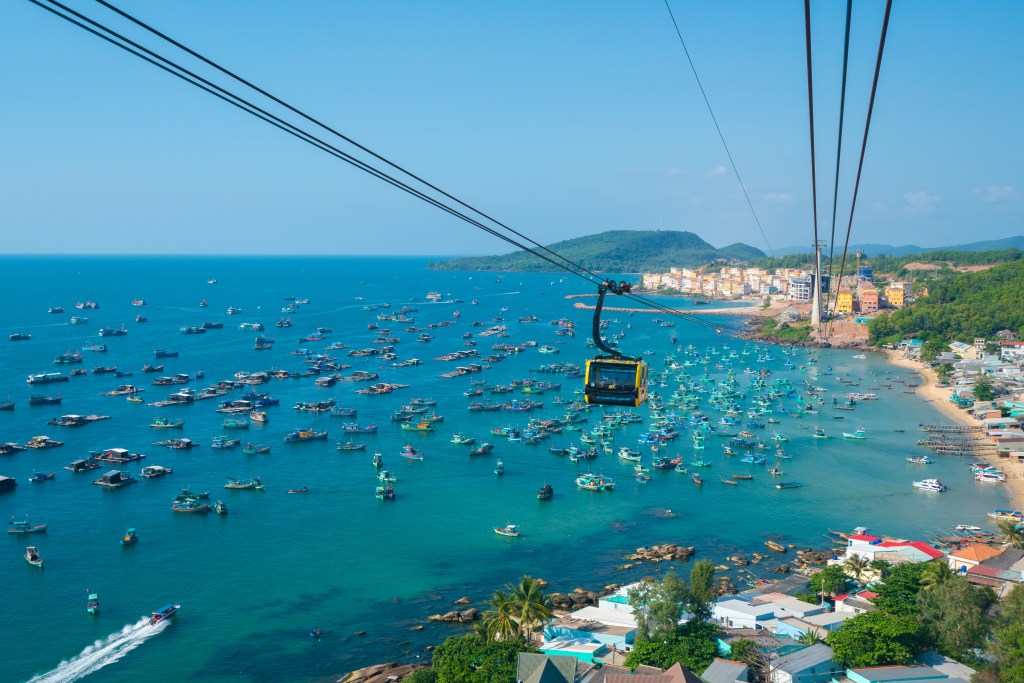
Phu Quoc Island is Vietnam’s largest island, spanning around 220 square miles. It’s located in the Gulf of Thailand—meaning you can expect mouthwatering beach views. It’s been shouted out over the last few years by major travel publications like Conde Nast and World Travel Awards thanks to its forested setting and unspoiled nature.
If you’re after a Thailand-style island getaway, Phu Quoc is your option. However, I have to be honest—I’ve also heard negative things about tourism in Phu Quoc, namely related to irresponsible development projects. It’s seen massive growth (30% annually) in its tourism sector. In short, I recommend researching Phu Quoc Island if you’re visiting with hopes of soaking up its natural wonders.
Central places to visit in Vietnam: Da Nang & Hue
Da Nang
Da Nang is a coastal city that’s become a popular stopover for tourists. If you’ve seen photos of a bridge that spans two massive sculptures of hands that seem to be jutting out of a mountain, that’s close to Da Nang. The Golden Bridge, as it’s called, is actually located slightly inland from the beach town on the grounds of the private Ba Na Hills Resort.
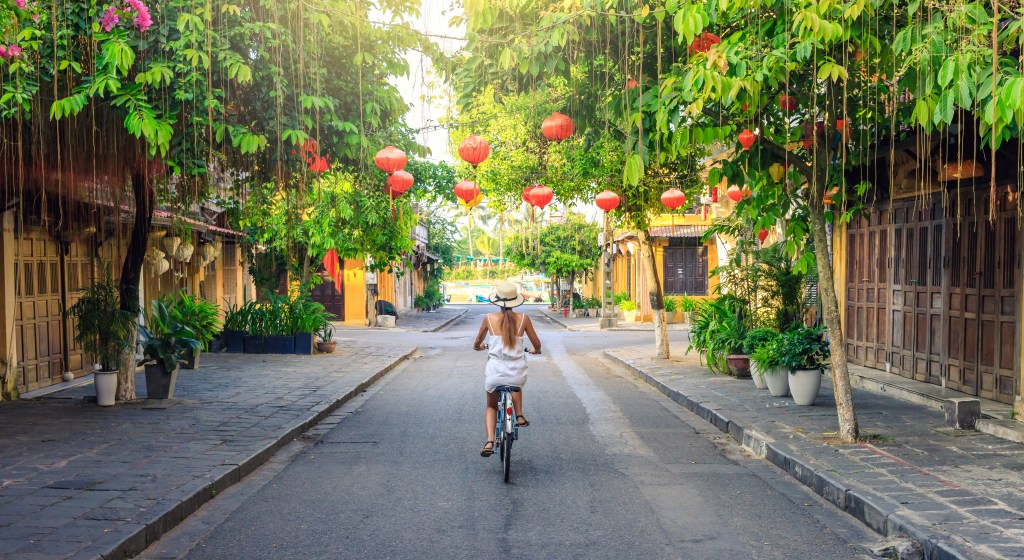
Similarly, you might know Da Nang for being the largest hub near Hoi An. Hoi An is a UNESCO-listed ancient trading port that was used by Southeast Asian dynasties for around four centuries until the 1800s. Hoi An is located just outside Da Nang—you can easily visit by booking a taxi ride that takes around twenty minutes.
That should clue you in: Da Nang has more to offer than gorgeous beaches. It’s now the fourth-largest city in the country, meaning you can find nightlife, street food, and more. But there’s also plenty to do in the way of culture (Hoi An) and nature (the area is surrounded by mountains).
Hue

Welcome to Vietnam’s most recent imperial city. Home to the Nguyen Dynasty, which ruled from 1802 to 1945, Hue has a fantastic list of historic sites. If you want to delve deep into Vietnamese imperial history (it’s endlessly lush and cool, in my opinion), you should stop in Hue to visit the Imperial Citadel, Forbidden Purple City, and royal tombs.
If you’re a foodie, you might also like sampling some of Vietnam’s most traditional sweets and dishes. Local restaurants have preserved the country’s royal traditions—especially when it comes to cuisine. You can—literally—eat like an imperial majesty in Hue. Don’t skip the sesame candy and bun bo hue.
Places to visit in Vietnam in the north: Hanoi, Ha Long Bay, Ninh Binh, & Sapa
Hanoi

Hanoi is Vietnam’s largest northern city, it’s second-most popular city, and the capital of the country. It has a wildly intriguing feel to it, blending ancient history with French colonial structures with modern buildings. The Old Quarter is worth getting lost in. While it only spans around 36 streets, it’s home to plenty of street food stalls, little shops, and casual bars.
The city sits on the shore of a large lake, Hoan Kiem Lake, which has an iconic temple in its center. Aside from architecture, Hanoi is renowned for its street food. Plan to eat your way through the city as you sample pho, bun cha, bun dau mam tom, and egg coffee.
Ha Long Bay

Ha Long Bay looks like it’s out of an Avatar movie. Massive limestone ‘karsts’ jut out of the cerulean water, layered with lush jungles. From the port of Haiphon on the mainland, you’ll cruise between these gorgeous giants to Cat Ba Island. There’s not too much to do on Cat Ba aside from relax and take in the sights, so this stopover is ideal for nature-lovers.
I stayed on Ha Long Bay for three nights, which was plenty of time to get the lay of the land, take a few tours on the water and across the island, and actually relax. How long you stay is up to you, but I recommend sticking around for more than a quick tour. You’ll find yourself staring off into the distance, captivated and curious by those limestone karsts, more often than not.
Ninh Binh
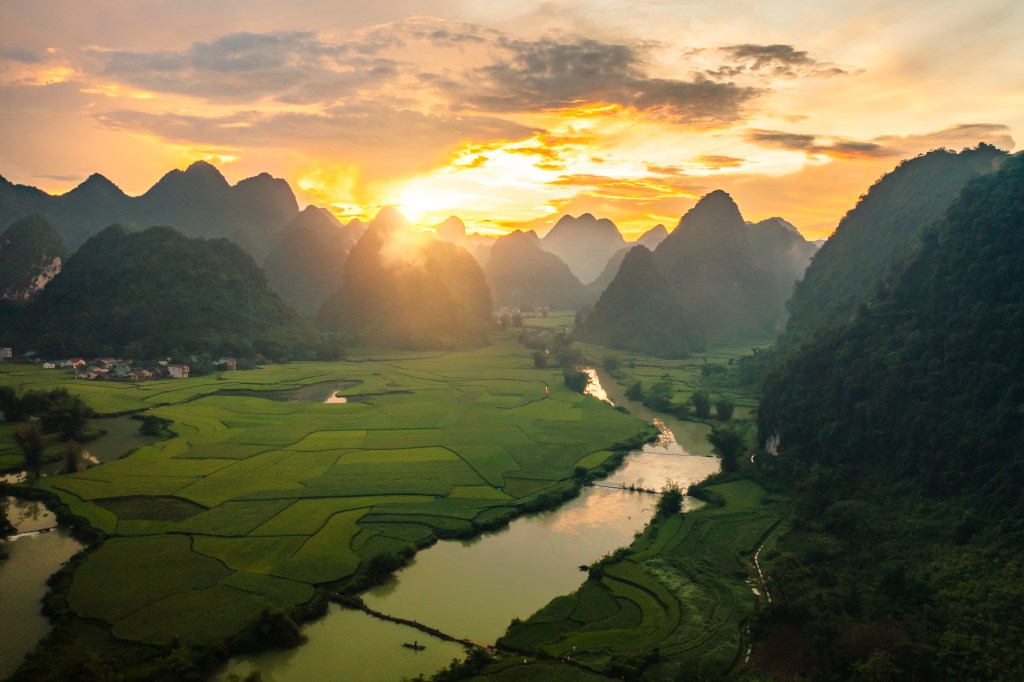
What if I told you that Ha Long Bay isn’t the end-all of striking sights in Vietnam? Those same limestone karsts that have made Ha Long Bay so popular can also be found inland. Welcome to the stunning rice paddies and jutting mountains of Ninh Binh, part of the Red River Delta.
Ninh Binh isn’t a town or a village—it’s the whole province. It’s located just south of Haiphong where you can catch a ferry to Cat Ba Island in Ha Long Bay. It’s home to some of the country’s most stunning natural wonders, which you can experience in Cuc Phuong National Park, the Mua Caves, Tam Coc-Bich Dong, and even Bai Dinh Temple, a large pagoda complex.
If you visit Ha Long Bay and enjoy the type of natural setting, then head to Ninh Binh for a few days. You’ll be just as taken with the lush, jungle-covered karsts that span the horizon.
Sapa
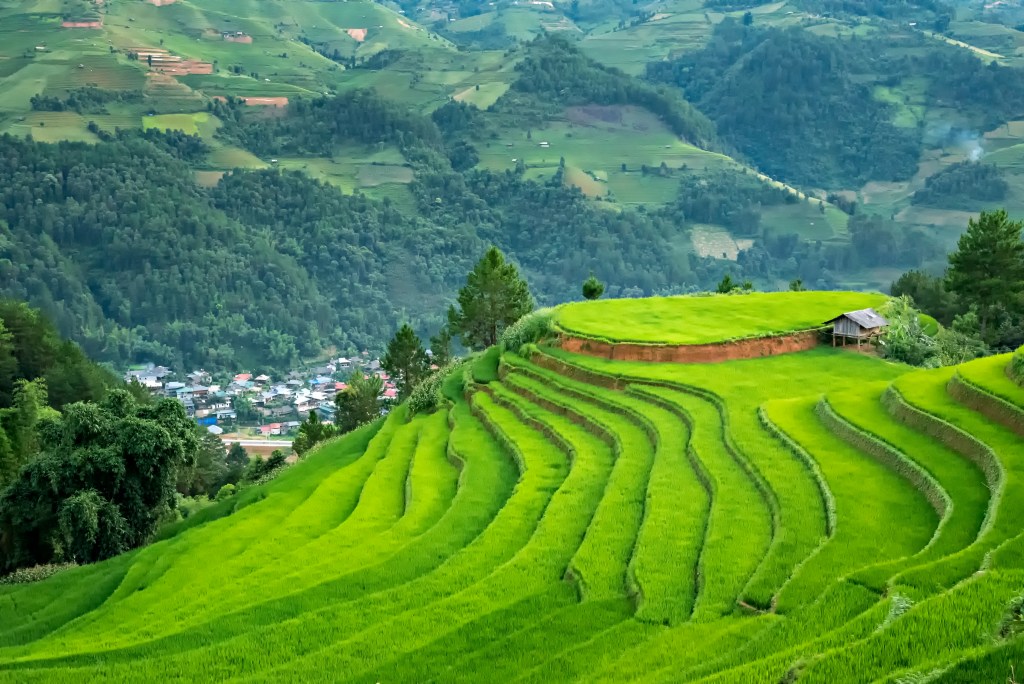
Wondering what a mountain town in Vietnam is like? Head to Sapa. If you’ve heard the name before, it might be thanks to the area’s famed rice paddies. Outside town, the Muong Hoa Valley is home to dramatic, tiered rice paddies that climb the mountains and span almost 5,500 acres.
Aside from the lovely landscape, Sapa is also a great place to get to know Vietnam’s smaller tribes. You can experience their culture as you eat at restaurants, shop at the bazaars, and take village tours. There’s even a weekly ‘love market’ where traditional courtship rituals happen.
Lastly, Sapa is home to Fansipan Mountain, which is the tallest in the country—and one of the tallest in the region aside from Myanmar’s gargantuan peaks. You can take a cable car to the top of Fansipan, where you’ll be treated to panoramic views of the rugged jungle and peaceful silence.
