
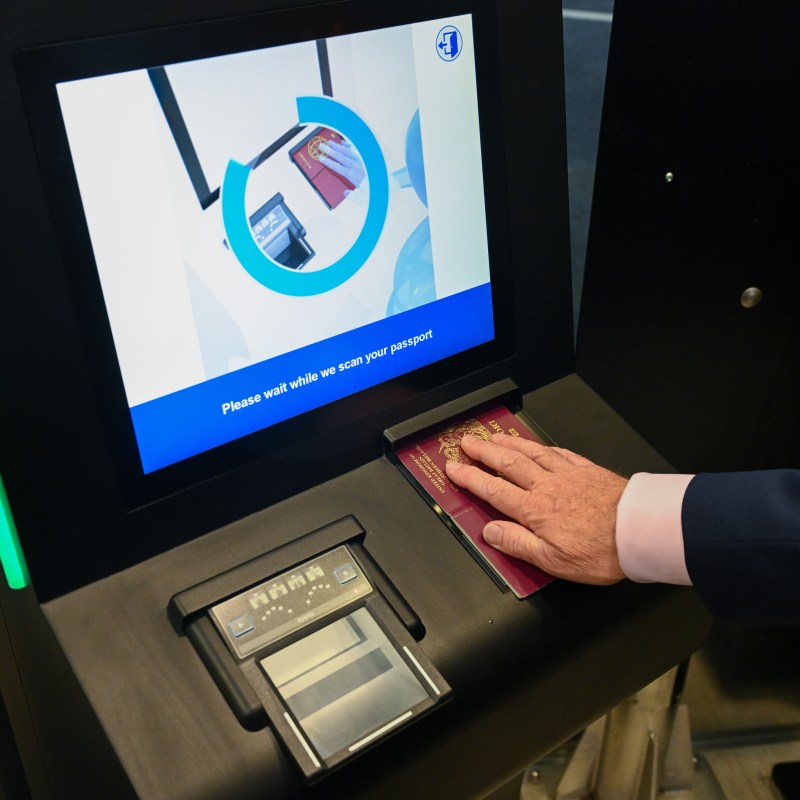
Are you a traveler who looks forward to getting your passport stamped at customs? I have some bad news.
Videos by TravelAwaits
Starting on October 12, 2025, countries in the European Union and the Schengen Area will no longer stamp passports for visiting nationals. Instead, the countries will move to a fully digitized Entry and Exit System or EES.
If you’ve been following news about changes to visa applications for the EU, then you might be familiar with the EES. It’s the digital border system that the EU and Schengen countries are adopting in order to launch next year’s ETIAS. ETIAS has been delayed because it can’t launch without the EES, which has also faced setbacks.
ETIAS stands for the European Travel Information and Authorization System. Once the EES is established and ETIAS launches, Americans (and all other non-EU nationals) will be required to apply for a travel visa. The visa will cost €20 and last for three years, similar to the UK’s ETA.
A closer look at the EES
Instead of manually reviewing and stamping passports, the EES will run on biometric data, including a face scan and fingerprint. The goal of the EES is to automate and optimize customs information, making it easier for people to move around and for regulatory bodies to make sure no one is overstaying their visa.
All personal data will be stored for three years (for the duration of the ETIAS visa) and will not be sold or otherwise transferred to third parties. That’s an important note—when the US’s Customs and Border Protection uses biometric facial scanning technology, the entity has full discretion to use that data because there are no federal regulations on the topic.
In other words, if you’re a little iffy about handing out biometric data in the US, you can rest assured knowing that EU law prevents ETIAS biometric data from being shared.
Unfortunately, however, there aren’t any regulations preserving those cute passport stamps. But with the promise of streamlined passport checks and even self-service options, you do get a trade-off: shorter lines at customs.
