
You’ve likely heard of acupuncture, a traditional medicine practice that involves using needles to activate certain pressure points.
Videos by TravelAwaits
But do you know about its needle-less and travel-friendly alternative, acupressure?
Acupressure is based on a similar Chinese medicine system that maps out the body according to meridians. These meridians help direct and stimulate the flow of energy in our bodies. According to Traditional Chinese Medicine, or TCM, the body has 12 major meridians and 260 acupoints.
I like to think avid travelers who have wandered off the beaten path have had run-ins with acupressure. During bouts of nausea, motion sickness, and headaches, I’ve had kind strangers introduce me to acupressure points that have helped alleviate my pain. While I don’t have a background in TCM, acupressure has consistently helped me handle travel woes when in a bind.
Yes, I like to keep my toiletry bag stocked with my go-to OTC medications on my trip. But knowing a thing or two about how to calm motion sickness, altitude sickness, and other common travel maladies with a little pressure is never a bad idea.
Here’s what you need to know about acupressure points that help with travel pains.
Intro to acupressure for travel: how to do it
If you want to learn about acupressure, I recommend consulting the experts. For the purposes of this article, I used sources like ScienceDirect, National Library of Medicine, Medical News Today, and Healthline.
Just know that this is an ancient TCM practice that is divided into five categories, which include those famously painful Shiatsu massages. Scientific studies and research support the basics of acupressure. All pressure points and meridians have codes that make it easier to remember and locate; Stomach 25 is written as ST25, for example.
To do acupressure, you simply use your fingers to apply firm pressure to a pressure point. You can use your pointer and thumb, or any other combination that works for you. Make sure that you’re applying firm pressure that you feel—usually described as ‘hurting good’.
Hold the point for two to three minutes three times a day. Don’t exceed more than ten minutes on any given acupressure point. Now onto the fun stuff, like how to use acupressure points to alleviate common travel symptoms. In the last section, you can find images that show each point more clearly.
Acupressure points that help with travel pains
For constipation
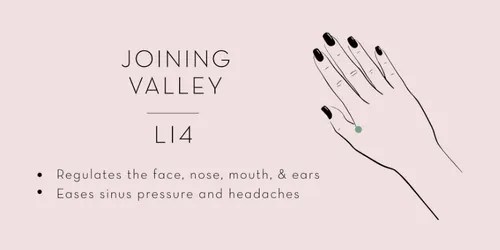
- LI 4: Located on the back of the hand between the thumb and index finger. To locate this point, squeeze your thumb and finger on the highest spot of your muscle, which usually has a bulge. Apply firm, steady pressure.
- TW 6: Located on the outer forearm between 3-4 finger lengths above your wrist crease. Your fingers should sink slightly into a depression between your bones as you squeeze firmly.
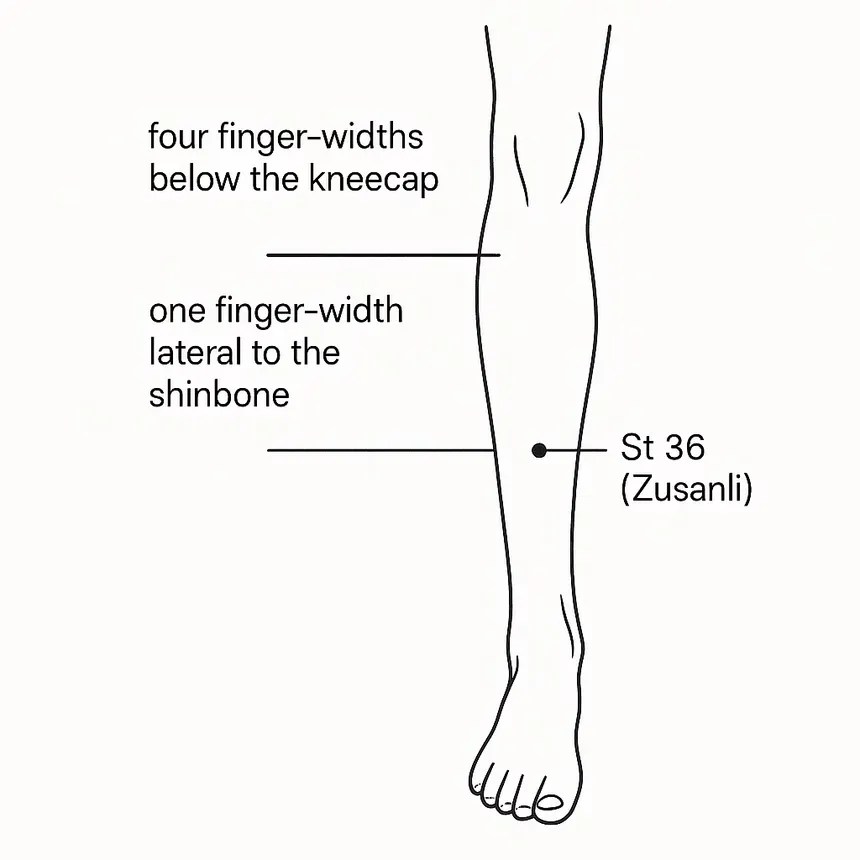
- ST 36: Located three to four finger lengths below your kneecap and one finger length outside your shin bone. Find the small depression between the shin bone and muscle, then apply pressure there.
For nausea
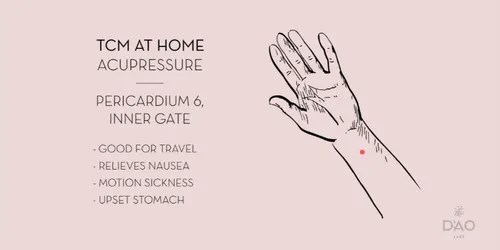
- PC 6: Located on the inner forearm around 2-3 finger lengths above the wrist crease. You should sink into a spot between your two primary tendons. Set your hand palm-up to locate this acupressure point easily.
For motion sickness
- PC 6: Located on the inner forearm around 2-3 finger lengths above the wrist crease. You should sink into a spot between your two primary tendons. Set your hand palm-up to locate this acupressure point easily.
- LI 4: Located on the back of the hand between the thumb and index finger. To locate this point, squeeze your thumb and finger on the highest spot of your muscle, which usually has a bulge. Apply firm, steady pressure.
- ST 36: Located three to four finger lengths below your kneecap and one finger length outside your shin bone. Find the small depression between the shin bone and muscle, then apply pressure there.
For headaches
- LI 4: Located on the back of the hand between the thumb and index finger. To locate this point, squeeze your thumb and finger on the highest spot of your muscle, which usually has a bulge. Apply firm, steady pressure.
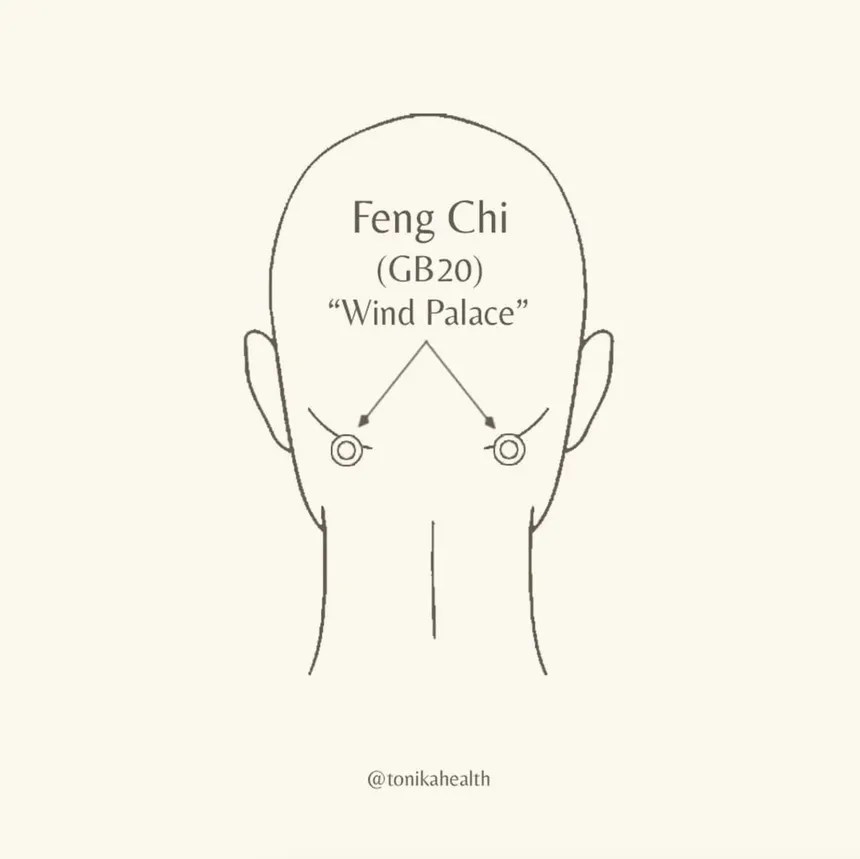
- GB 20: Located at the base of the skull in the hollow depression made on either side of your spine. It’s located at the top of the trapezius muscles. It’s easier to find when you tilt your head forward slightly, and it is usually massaged using thumbs.
For sinus congestion
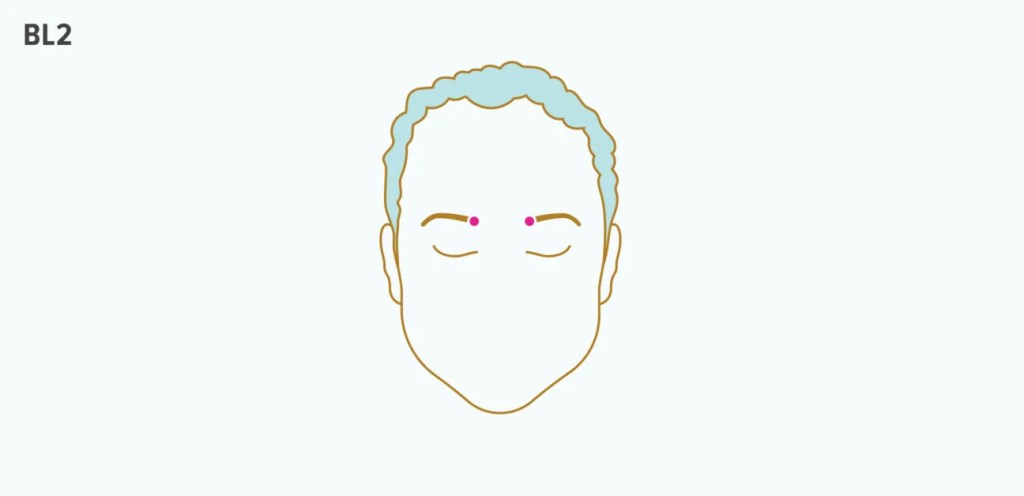
- BL 2: Located at the start of your eyebrow near your third eye, directly above your inner eye. It’s the spot where your eyebrow meets the bridge of your nose. This area tends to be sensitive, so no need for overly firm pressure.
- LI 4: Located on the back of the hand between the thumb and index finger. To locate this point, squeeze your thumb and finger on the highest spot of your muscle, which usually has a bulge. Apply firm, steady pressure.
- GB 20: Located at the base of the skull in the hollow depression made on either side of your spine. It’s located at the top of the trapezius muscles. It’s easier to find when you tilt your head forward slightly, and it is usually massaged using thumbs.
For altitude sickness
- PC 6: Located on the inner forearm around 2-3 finger lengths above the wrist crease. You should sink into a spot between your two primary tendons. Set your hand palm-up to locate this acupressure point easily.
For insomnia
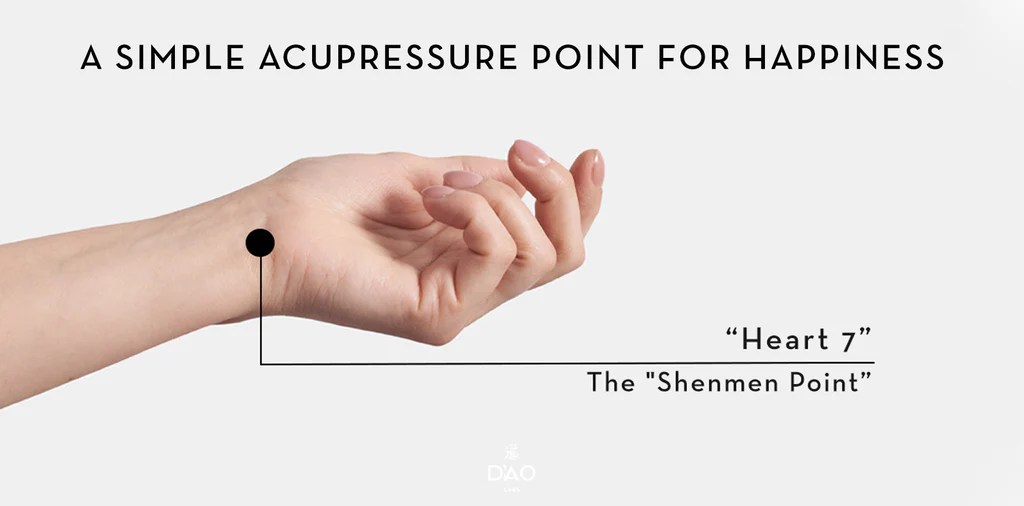
- HT 7: Located on the inner wrist crease (with palms facing up). You will feel a slight depression on your wrist line. I recommend looking for images of this acupressure point—it’s more difficult to find than the others.
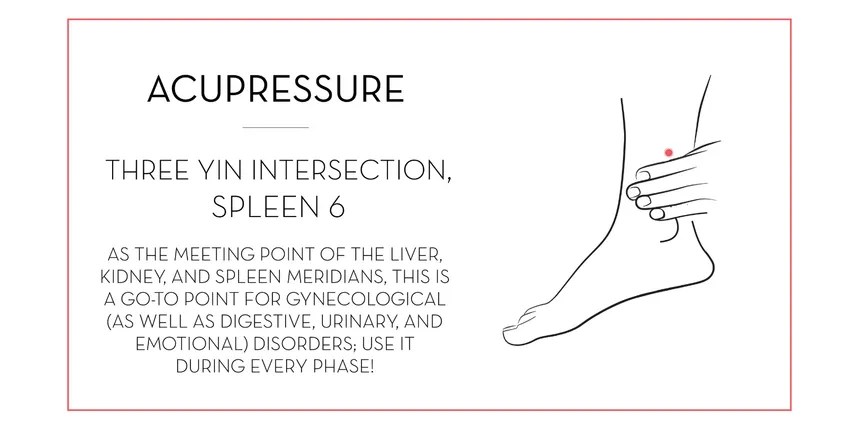
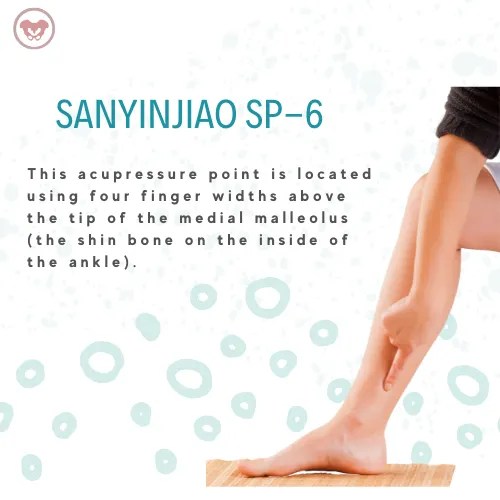
- SP 6: Located around four finger lengths from the inner ankle bone. Place your fingers in a slight depression below the shin bone and apply pressure.
- PC 6: Located on the inner forearm around 2-3 finger lengths above the wrist crease. You should sink into a spot between your two primary tendons. Set your hand palm-up to locate this acupressure point easily.
Acupressure for travel: images