
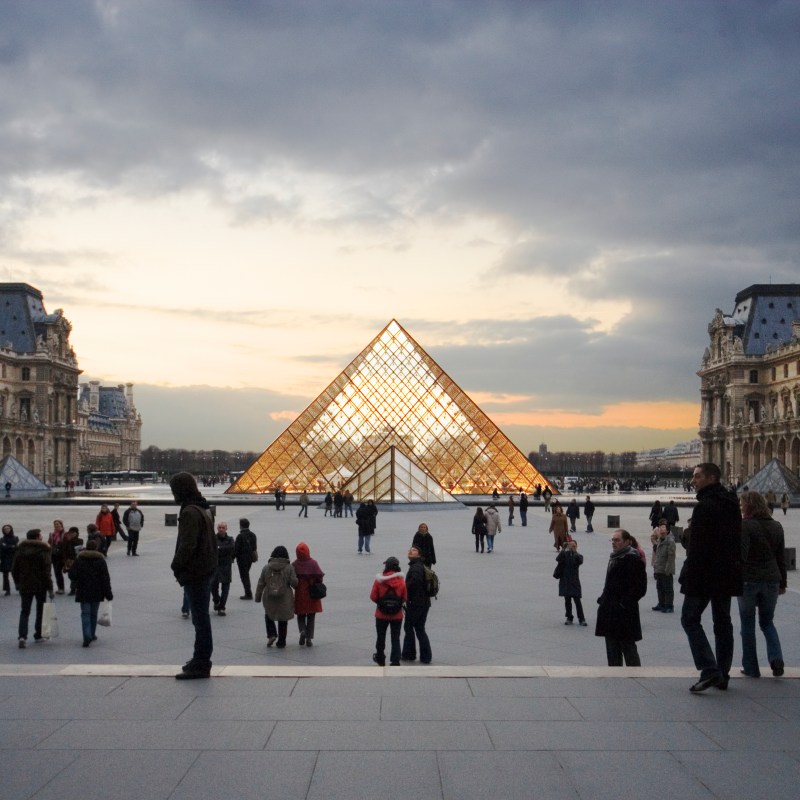
The Louvre defies easy explanation.
Videos by TravelAwaits
Sure, it’s the most famous museum in the world—and the busiest. It welcomed almost nine million people in 2025, meaning almost 25,000 people milled through the museum every single day. Despite that massive sum, it didn’t stop a few brazen thieves from pulling off the heist of the century in October last year.
Once a fortress-turned-royal palace that housed monarchs from the 1300s until the 1600s, the Louvre is now one of humanity’s greatest cultural inheritances.
And it’s hiding more than a few wild, insane side quests inside its walls. From insane facts to hidden gems you can’t miss, here’s what you need to know about the Louvre before your next (or first) visit.
(Looking for a central place to stay in Paris? Start here.)
7 surprising facts about the Louvre—plus, cool gems to find inside
Entry is free once a week for under-26s & once a month for everyone else
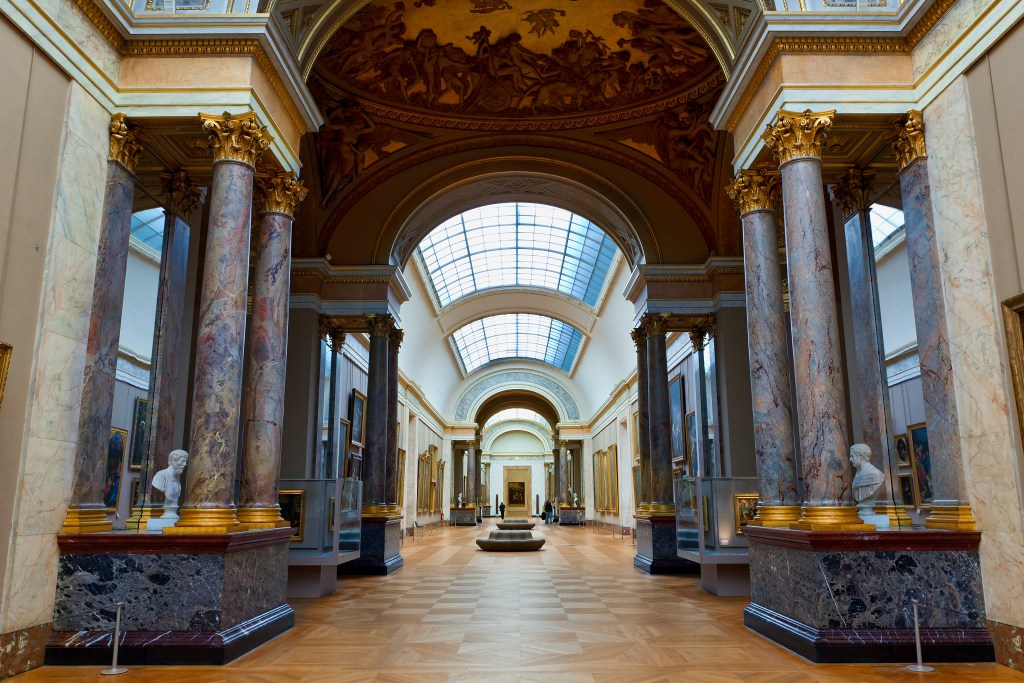
The Louvre is the world’s largest museum, and it hasn’t forgotten its mission to bring fine arts to the masses. The museum is free to the public every first Friday of the month after 6 pm, except in July and August. It’s also free on July 14 (Bastille Day). Even better, it’s free for anyone under the age of 25.
Just know that you still need to book your ticket to visit during a specific time slot. If you want to visit during the free slots on Friday, look for tickets a few days ahead of time. They’re available via the official ticketing site.
It’s not the only Louvre

Around 100 miles north of Paris in the small town of Lens, you can find another Louvre—fittingly called the Louvre-Lens. The decision was made back in 2003 to create an ‘off-site Louvre’ that could be used to house national art collections. In 2012, Louvre-Lens opened its doors.
The main exhibit is the commanding Galerie du Temps, or Gallery of Time, which spans almost 33,000 square feet. The Gallery of Time showcases some of the Louvre’s oldest and newest pieces, taking you on a journey that explores masterpieces as old as 3,500 BCE and as young as 1850 CE.
It held a tax department until 1989
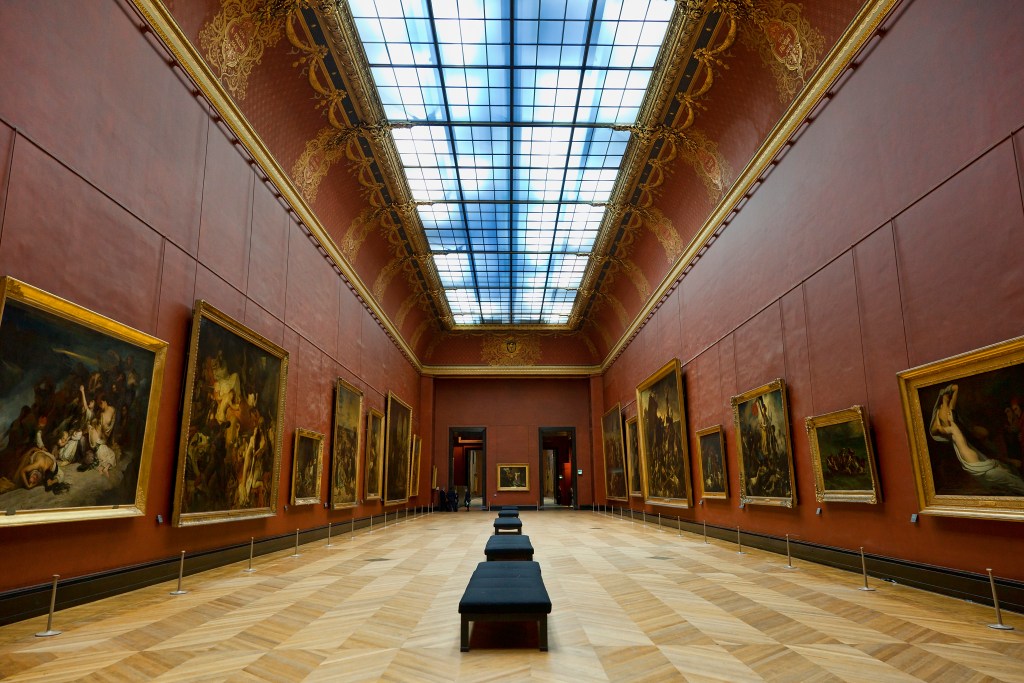
In a surprisingly gauche and unartistic turn, the Louvre held the French Ministry of the Economy and Finance offices until 1989. That’s the bureau responsible for managing tax declarations, meaning actual citizens would send their annual statements to the Louvre for processing each year.
While that might sound surprising, it was a longstanding tradition. Back when the Louvre was a fortress, it was used as a Royal Treasury. The Royal Treasury was housed near the future Richelieu wing of the Louvre… where the Ministry of the Economy and Finance would eventually set up shop.
Some works of art are thousands of years old
The Louvre’s oldest work of art is the Ain Ghazal statue, which was taken from the Ain Ghazal archaeological site in Jordan in 1985. The statue is one of several large-scale human figures that stand over one meter tall and were created from gypsum plaster. Though their original purpose and design are unknown, it’s believed they were once painted in bright, vibrant colors.
A Medici lived there—and you can check out her graphic tomb
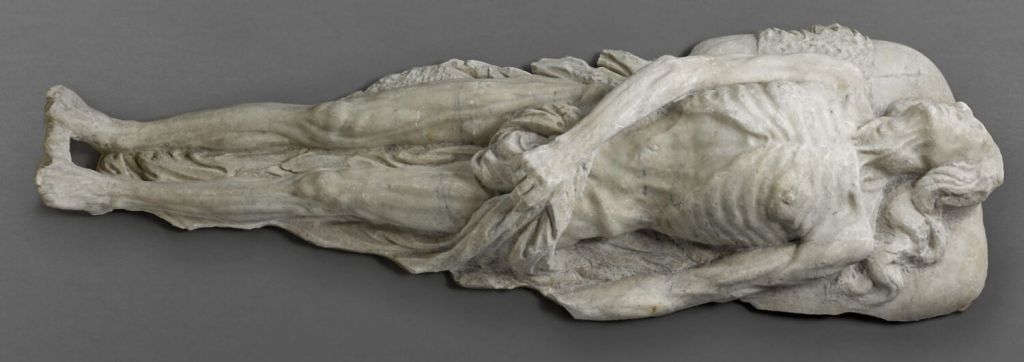
If you’re a fan of the Louvre and French history, you might already know that one of Florence’s most powerful families sent a daughter to marry a French king. That woman was Catherine de Medici, daughter of the Duke of Urbino and one of Italy’s foremost Renaissance thinkers and philanthropists.
While she isn’t laid to rest in the Louvre, she had a very interesting and lifelike tomb commissioned for herself by Italian artist Girolamo Della Robbia. It’s grotesque and realistic, and it weirded people out enough that it was removed from the Basilica of Saint-Denis and moved to the Louvre as a work of art.
Headless saints are kind of a motif
Paris’s patron saint is Saint Denis, a man who is said to have been beheaded before (miraculously) picking up his severed head and preaching as he marched six miles around the city. You’ll notice a prominent painting of him by Henri Bellecose, titled Calvary and the Martyrdom of St. Denis. It’s one of several depictions of saints holding their decapitated heads in their own hands.
Almost One-Fourth of all Da Vinci paintings are housed at the Louvre
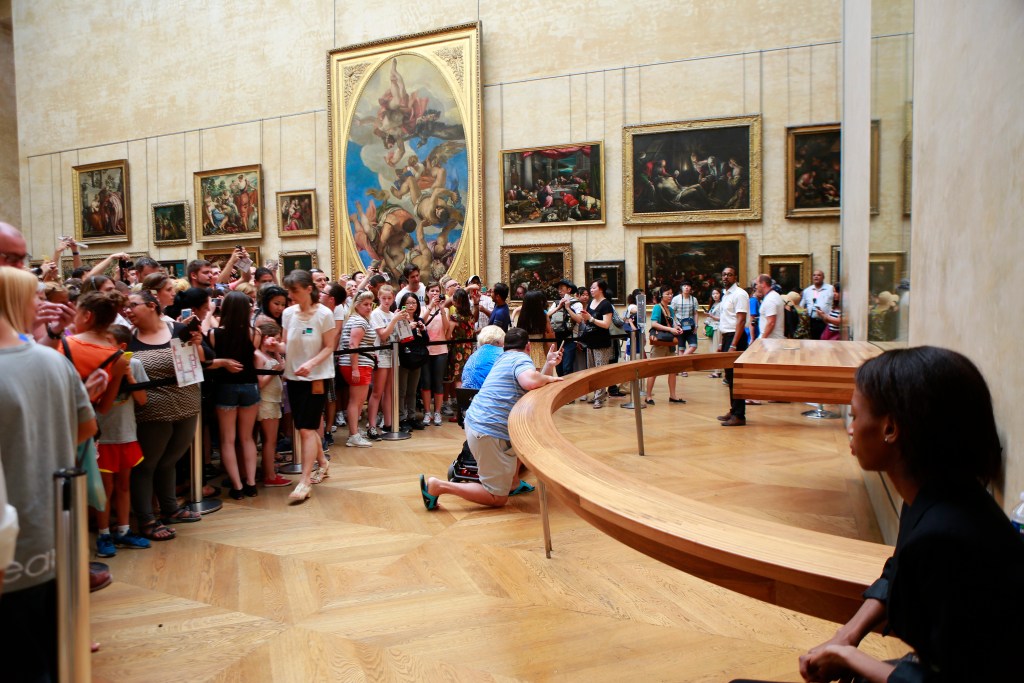
You might have read this factoid before: The Louvre has around one-fourth of all known paintings by Leonardo da Vinci. That might sound insane, but let’s dig into that statement. It only applies to paintings, first and foremost—Da Vinci also liked to invent things, write manuscripts, and create models.
Additionally, one-fourth of all Da Vinci paintings amounts to between 15 and 20 works. The Louvre is a little cagey about how many they have, and has only confirmed five total. The reason the Louvre has so many of Da Vinci’s paintings is that he served King Francis I in the later years of his life, meaning many major paintings were done in Paris or France.
