
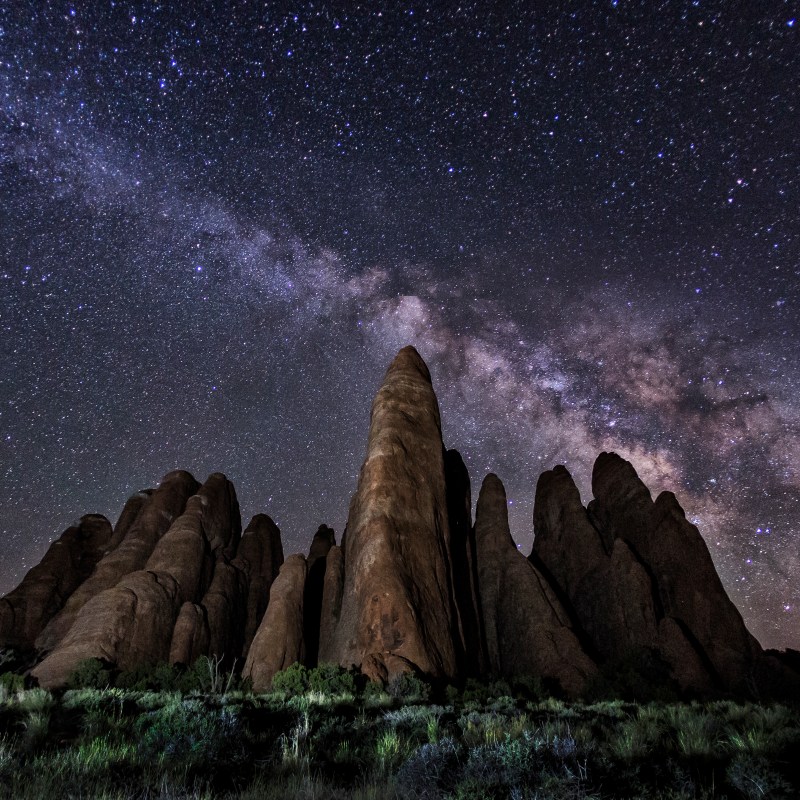
Even if you normally avoid winter travel out of fear of cold weather, there’s one reason to strike out into the wilderness in the dead of night.
Videos by TravelAwaits
Clear skies that showcase the Milky Way and beyond.
Whether or not you plan on camping in the boonies, you can absolutely plan a trip around gazing into starlit night skies. In fact, there’s an organization that actually studies and lists the world’s darkest skies.
Welcome to Dark Sky, an organization with 70 chapters around the world that are dedicated to studying the night sky, preserving it by tackling light pollution, and educating others about those twinkling stars. The Board of Directors is made up of astronomers, physicists, engineers, observatory professionals, and more.
In short, they’re qualified to tell you where to go stargazing. And, best of all for Americans, there’s no need to bust out the passport. Our nation is home to a whopping 60 Dark Sky Places—including cities like Flagstaff, Arizona, which adopted outdoor lighting practices to minimize light pollution.
That should clue you in: You don’t actually need to pack up and ship off to the middle of nowhere to stargaze. In fact, many national parks with dark sky sanctuaries are a short drive from larger cities—and they’re shrouded in darkness now that it’s midwinter.
Want to know which national parks with dark sky sanctuaries are closest to you? Remember, if you’re going to plan trips to see these locations, schedule them during the new moon. A full moon, just like a city, can cause light pollution.
National parks with dark sky sanctuaries close to cities
Grand Canyon National Park (Arizona)
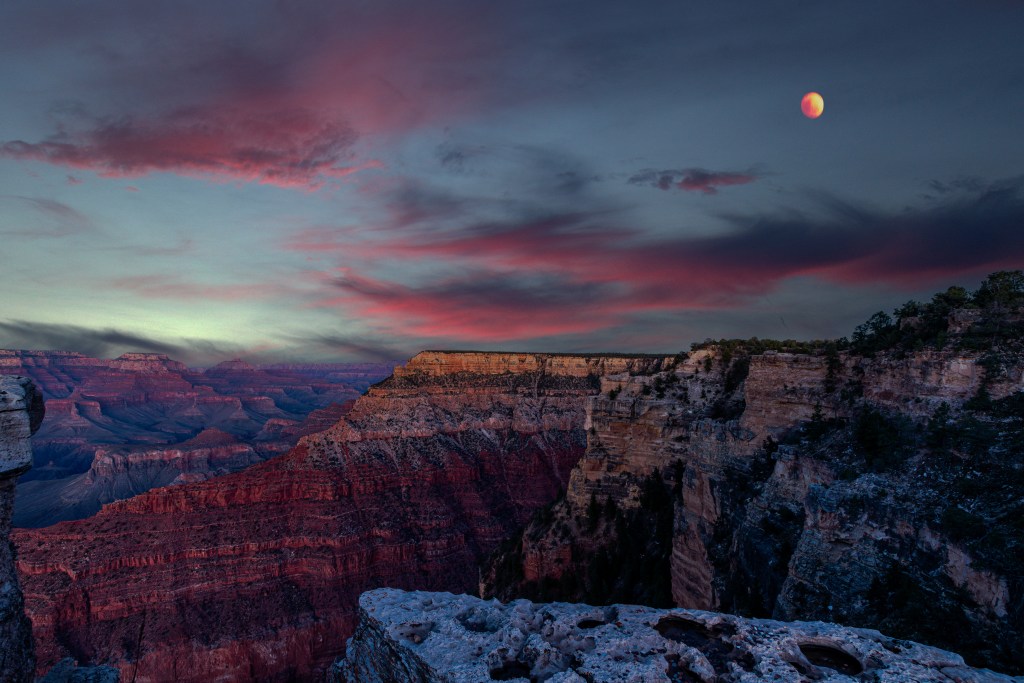
1.5 hours from Flagstaff, AZ
In 2019, during the Grand Canyon National Park’s centennial celebration, it was designated as a Dark Sky Place. Since then, the park has worked hard to switch out its light fixtures with dark-sky-compliant fixtures that minimize light pollution.
Death Valley National Park (California)
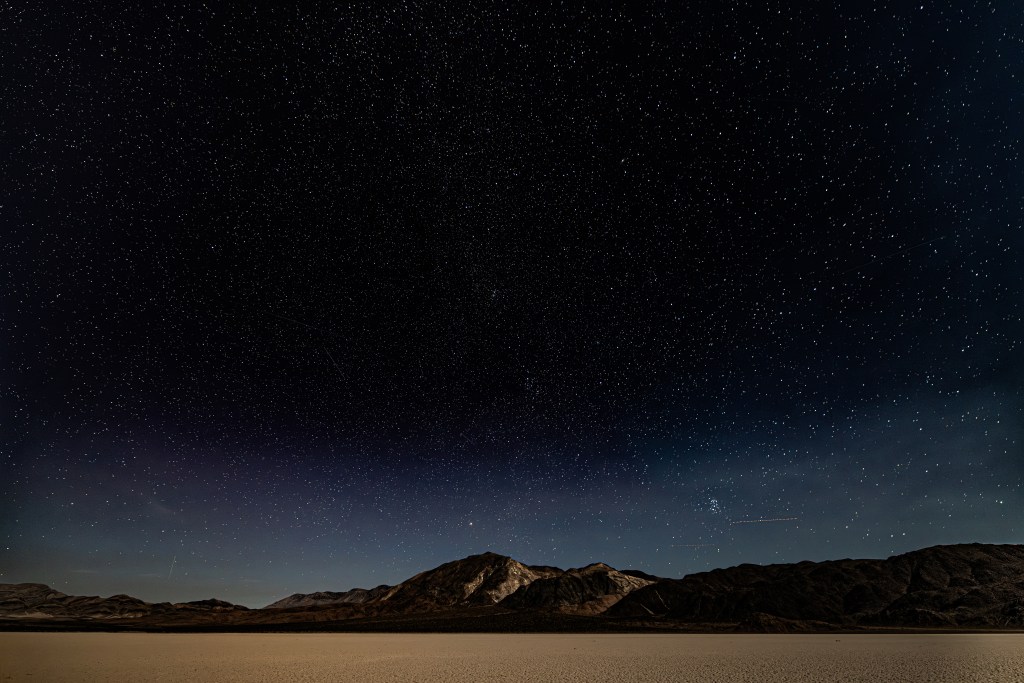
1 hour from Las Vegas, NV
Designated a Gold Tier International Dark Sky Park thanks to its massive size. Death Valley National Park spans almost 3.5 million acres, making it naturally resilient to light pollution. In fact, it’s considered one of the best dark sky locations in the world.
Joshua Tree National Park (California)
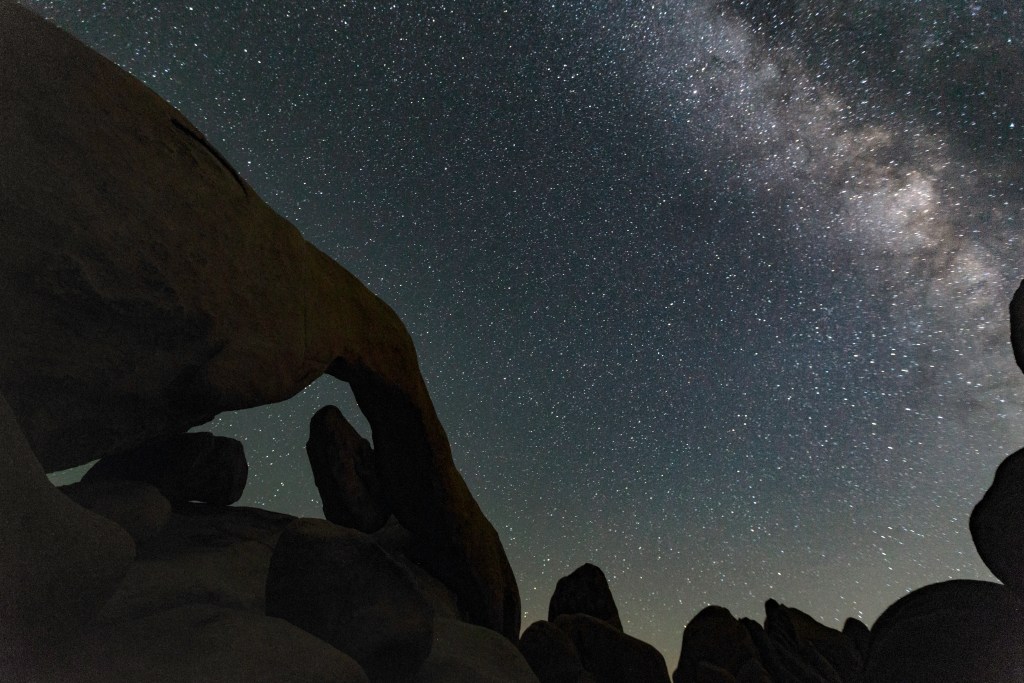
1.5 hours from Palm Springs, CA or 2-3 hours from Los Angeles, CA
You can reach a certified Dark Sky Place in only hours from Los Angeles—a hub that’s home to almost 20 million people across its metro area. Head to one of the park’s four designated stargazing areas: Quail Springs, Cap Rock, Ryan Mountain, and Hidden Valley.
Mesa Verde National Park (Colorado)

1.25 hours from Durango, CO
Mesa Verde National Park, located near the Four Corners, is one of the toughest to reach from big cities—but it’s got something the others don’t. If you stick around, you can enjoy views of the Milky Way at night, then explore the ancient cliff dwellings during the day. While the other national parks with dark sky sanctuaries are also lovely during the day, only Mesa Verde offers a glimpse into the area’s human past.
Great Sand Dunes National Park and Preserve (Colorado)
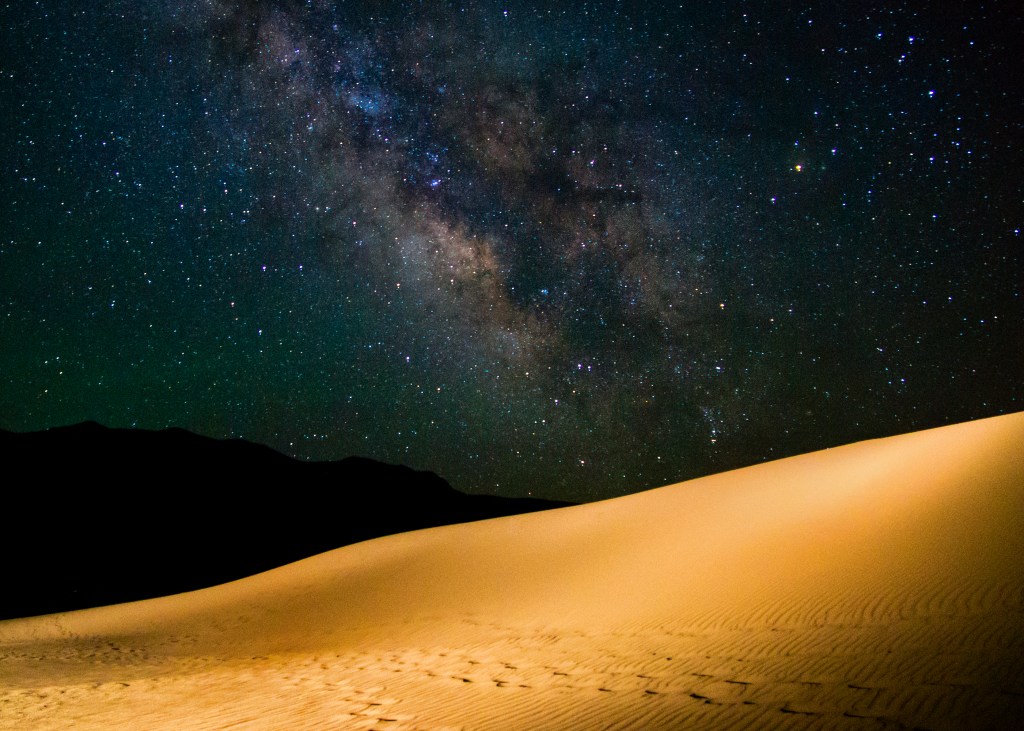
2.5 hours from Colorado Springs, CO
Did you know that Colorado is home to a park with grand sand dunes that seem to stretch into the massive Rocky Mountains? And that it’s one of the US’s quietest and darkest Dark Sky Parks? I could keep listing off things that make Great Sand Dunes National Park cool, but it’s best experienced yourself. As a perk, the park also offers stargazing courses.
Mammoth Cave National Park (Kentucky)
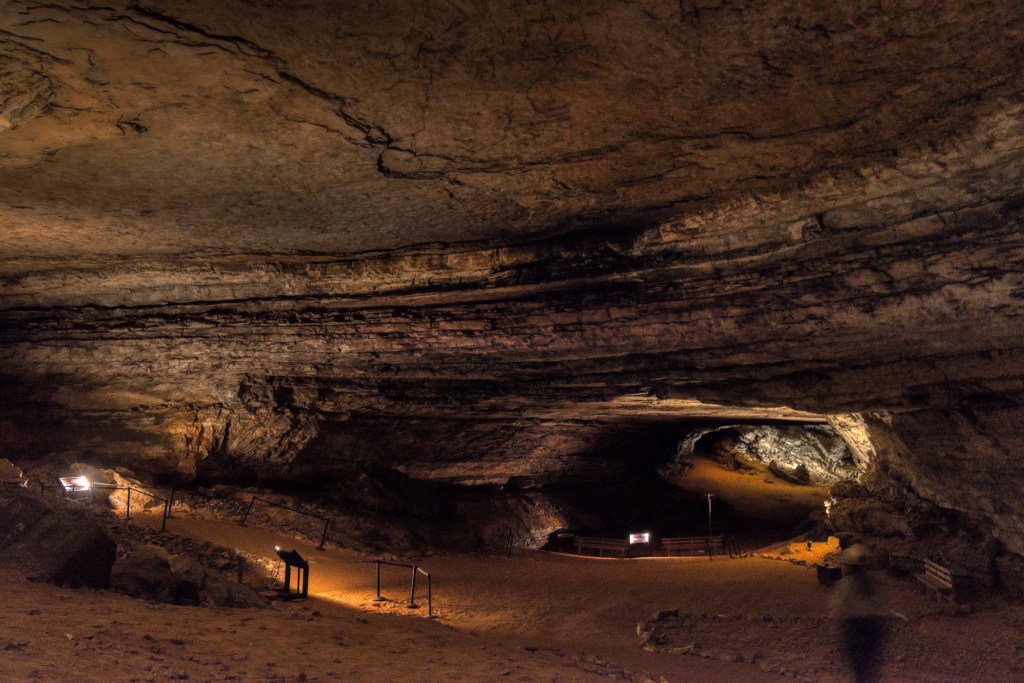
1.25 hours from Nashville, TN
When we think of national parks with dark sky sanctuaries, we tend to imagine the wilderness of the American West, where the population is smaller. However, Kentucky has its very own Dark Sky Park at Mammoth Cave National Park. It’s a short drive from Nashville, too, letting you explore the darkness with a few friends before cruising back into civilization. Did you know Mammoth Caves is also a UNESCO World Heritage Site?
Arches National Park (Utah)

2.5 hours from Las Vegas, Nevada
Assuming you can manage the 2.5-hour drive from Las Vegas, you can enjoy one of the darkest parts of the country. Almost all national park fixtures are Dark Sky compliant, letting you see almost 2,500 stars when you look up. If you’re okay with putting together a multi-day trip, you can also bundle in visits to Bryce Canyon and Zion.
