
Have you ever visited Barcelona, Spain, around the Christmas holiday?
Videos by TravelAwaits
If you have, you probably noticed one jarring sight: a plastic figurine squatting with its pants down, taking a poo. The cheeky souvenirs are eye-catching to say the least, but you might not have realized they’re part of a Christmas tradition called the caganer.
Caganer roughly translates to ‘pooper’ in Catalan—and, here’s the real shocker, he’s usually placed inside the nativity scene. You know, the nativity scene where baby Jesus sleeps in a manger surrounded by kings and livestock. That’s because the caganer is supposed to make you laugh.
After all, what’s sillier than hiding a pooping figurine in one of the most sacred religious scenes of the year?
The caganer is just the tip of the iceberg when it comes to the weirdest Christmas traditions in the world. Having lived in Europe for almost a decade, I can tell you… Christmas fare is shockingly mundane and sometimes straight-up weird in many locations. Let’s dig a little deeper to get to the good stuff.
7 weirdest Christmas traditions in the world
Caga tio: A log poops out your Christmas gifts in Catalonia
Did you think we were done visiting Catalan Christmas traditions? Too bad. There’s another one you need to know about—and it also involves poop. (What’s going on with Catalonia?) Caga tio, which translates roughly to pooping log in Catalan, is a large log with a face painted on one end and a blanket draped over the other.
In the lead-up to Christmas, children ‘feed’ and care for the log with the hopes it will yield them great presents. On the big day, children beat the log within an inch of its life while chanting a song encouraging the log to poop out their wish list. Parents then place presents under the blanket.
In the event that sounds way too wild to be true, I’ve lived in Barcelona for six years and am currently surrounded by caga tio decorations, including a stuffed animal. Caga tio’s formal name is Tio de Nadal, or Christmas Log.
Krampus: An Alpine beast scares evil away
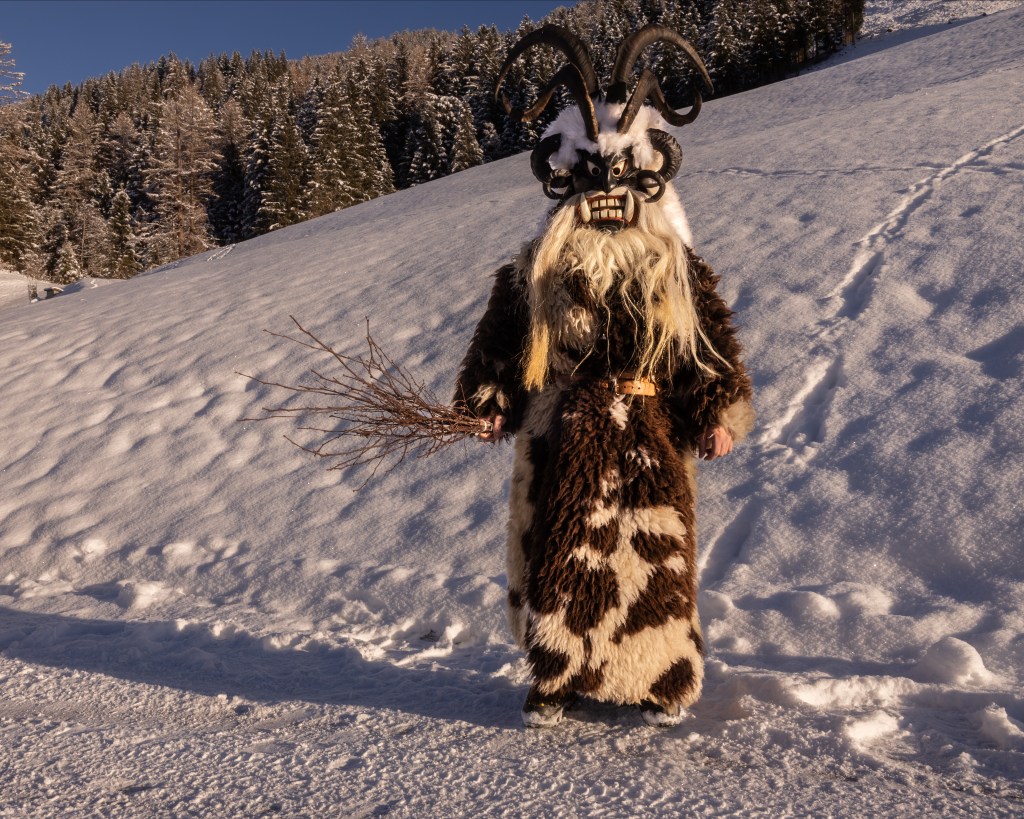
There’s plenty of Krampus fare out there, so I won’t bore you with a long explanation. Just know that, in many parts of central Europe, but especially in Austria, Saint Nicholas doesn’t work alone. Instead, Santa has a particularly unruly cohort named Krampus, whose job it is to scare the evil out of bad people during the Christmas holiday.
He’s become a bit of a crowd-pleaser, too. Dozens of cities, towns, and villages celebrate Krampus with ‘Krampus parades’ that involve packs of roving Krampuses who are there to terrify (and secretly delight) townsfolk.
Rollerskating: Caracas locals go to church in style
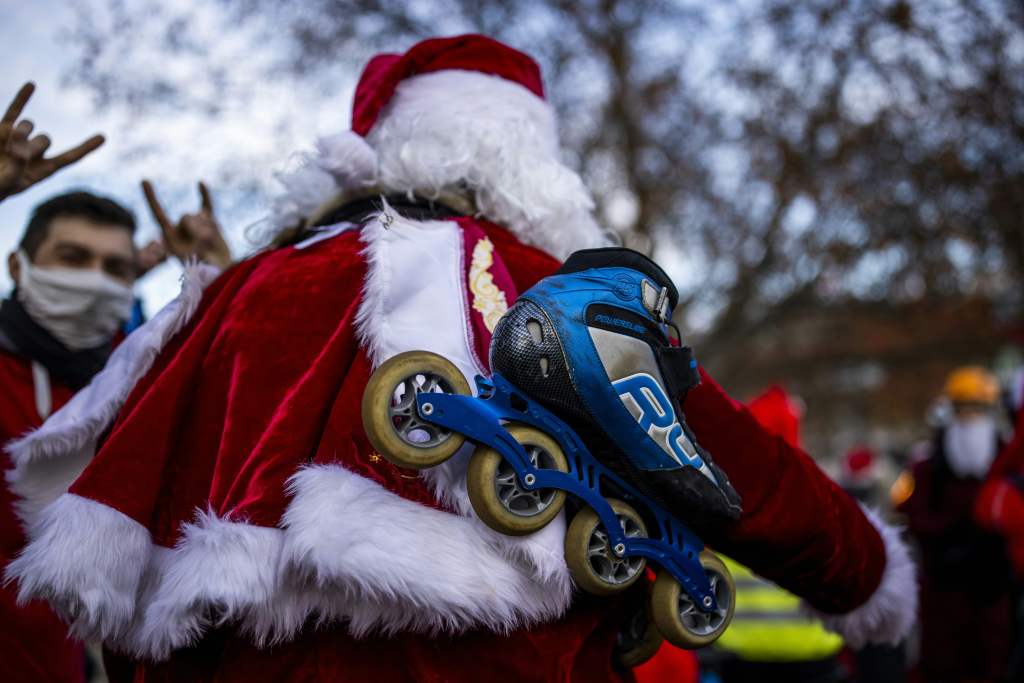
Locals in Caracas, Venezuela, have one of the coolest but weirdest Christmas traditions in the world: they roller skate to Christmas mass. The custom started in the 1950s when traffic congestion was particularly bad, causing many to arrive at the mass late. Since then, it’s become a beloved fixture.
Now, locals roller-skate to their preferred ‘Misa de Anguinaldo’, or Christmas mass, which usually takes place early in the mornings. According to some reports, city officials shut down major roads for up to eight days leading up to Christmas so people of all ages can take part safely.
La Quema del Diablo: Burning household goods in Guatemala keeps the devil at bay
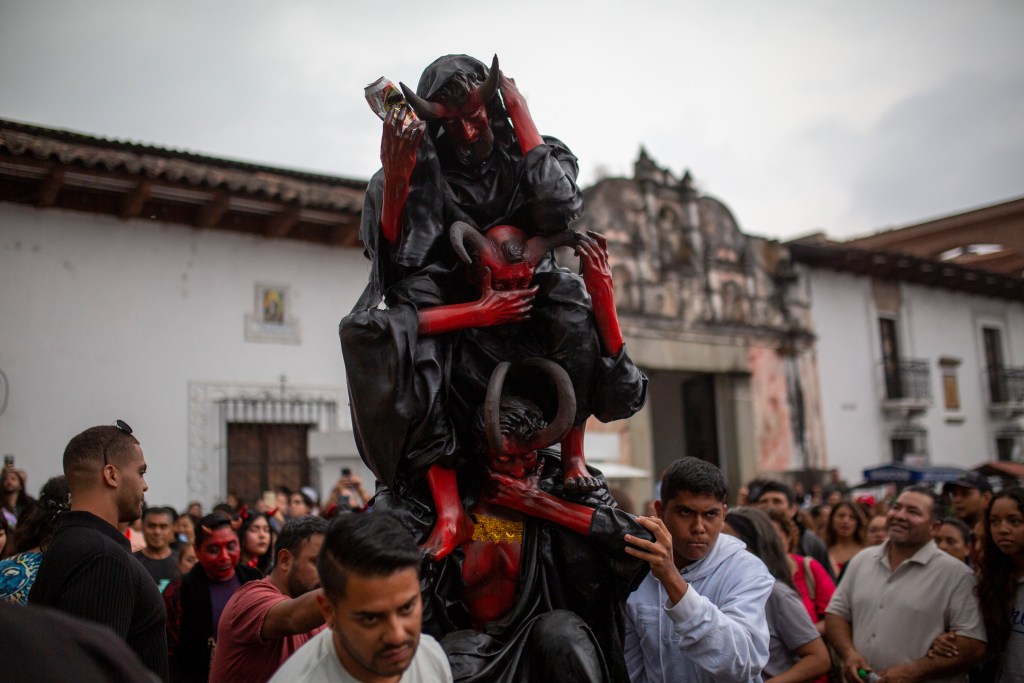
La Quema del Diablo is Spanish for the burning of the devil—it’s a very rock’n roll practice, in my opinion. Starting in colonial times around 400 years ago, Guatemalans began preparing for Christmas by cleaning out their homes. The idea is to make way for new blessings while clearing out negativity.
Guatemalans gather everything they want to throw away, then ceremonially burn these items. The idea is that they’re burning away bad energies associated with the devil and expelling any external or internal impurities. Toss the old into a bonfire, and burn away the bad.
13 Yule Lads: Devilish miscreants come bearing gifts in Iceland

Sort of like a twist on Snow White, Iceland has its own Yule Lads. There are thirteen small, mischievous trolls who scramble around the country during the thirteen days leading up to Christmas. Each has its own name and special prank, from slamming doors to peeping through windows to harassing sheep to licking spoons.
The Yule Lads arrive one by one, starting on December 12th, leading to mischief. Children can also put shoes on their windowsills in the hopes of attracting a little grace from the Yule Lads. Some leave candy—but others drop off rotten potatoes, instead.
Mari Lwyd: Feed the decorated horse skull in Wales

If you ever visit Wales and notice a small group parading a horse’s skull outside of your hotel, know that it’s just another Christmas in the countryside. The Mari Lwyd tradition is a centuries-old folk parade that involves leading a decorated horse skull that’s propped up on a pole around town.
Revelers surround the horse’s skull as they sing and tote it from house to house. The idea is for the group of singers to ask for entry into a home, and the homeowners to cleverly reply using wit. If the homeowners can’t outwit the singers, the horse’s skull enters the home and nips at the children, causing (playful) mayhem. When it’s all said and done, the home is blessed with good luck.
La Befana: Italy’s very own witch-Santa

In central Europe, Saint Nicholas has Krampus to help do his bidding. But in Italy, there’s La Befana instead. La Befana is an old hag-like witch who delivers gifts to children, taking on the role of Santa. But she’s an ancient figure from folklore who might be millennia old.
Every year, tens of thousands of La Befana fans gather in Urbania, which is rumored to be her hometown. Men and women dressed as La Befana descend from the town’s main tower where they juggle, dance, and otherwise delight the crowds. Piazza Navona in Rome also celebrates La Befana at its Christmas market.
